
Vietnam’s Real Estate Market: Trends and Insights for 2024
By Avison Young Vietnam analysts
Tue, December 17, 2024 | 12:48 pm GMT+7
As positive signals become more evident, now is the time to restart capital flows into real estate transactions in Vietnam and embrace the new growth cycle, as outlined by Avison Young Vietnam analysts.
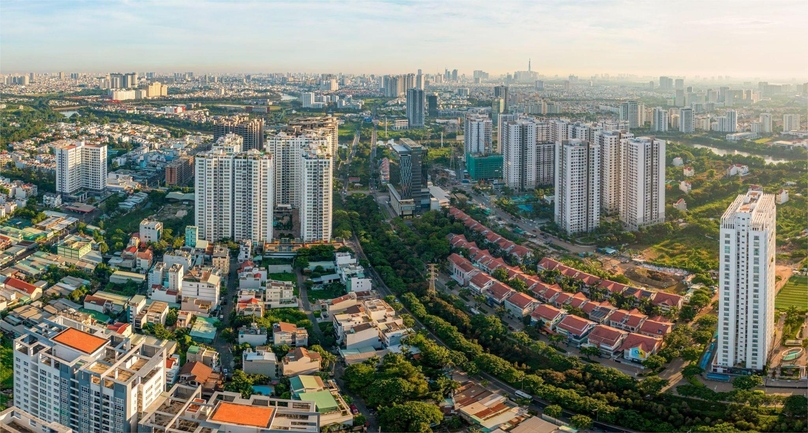
2024 is shaping up to be a year of significant changes on the global stage, from over 50 national elections to a shift in U.S. leadership with Donald Trump’s return. In Vietnam, August 1 marked a pivotal moment as three real estate laws took effect months ahead of schedule. Despite a sluggish start to market activity, shifts in the macro-economy and geopolitics promise to reshape the real estate landscape ahead.
Key Trends Shaping Vietnam’s Real Estate Market in 2024
Residential Segment on Recovery Track Amid Supply Imbalances
The housing market in 2024 is showing signs of recovery compared to the previous year, driven by an influx of high-end apartment supply in the latter half. In Ho Chi Minh City, a majority of new developments fall within the high-end category, with prices escalating to VND72-142 million (approximately $2,830-5,590) per square meter. This upward trend in re-launched project prices reflects a growing demand.
Meanwhile, in Hanoi, residential prices have surged sharply from early 2024, with units priced at VND70 million/sqm increasingly commonplace by Q3. As we entered Q4, primary prices were observed to rise by 2-4% quarter-on-quarter.
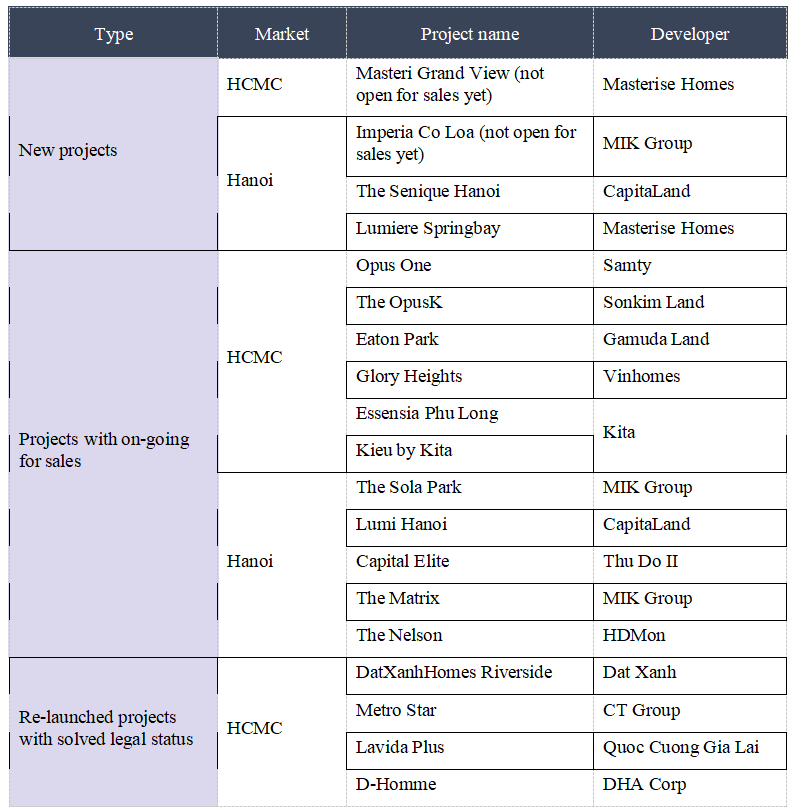
However, supply remains constrained in the mid-range segment across both cities, and affordable housing options, typically priced under VND38 million ($1,500)/sqm, are nearly non-existent. The relentless price hikes are distancing the market from its intrinsic value, raising liquidity risks.
Despite the barriers to affordable housing development, opportunities exist. Increased efforts to build budget-friendly commercial projects and social housing in suburban regions may catalyze sustainable growth. Recent projects launched in areas such as HCMC’s Binh Chanh district highlight this trend.
Additionally, HCMC aims to enhance residential development through the establishment of 11 compact urban areas and an auction of land plots around metro stations, presenting new land bank opportunities for developers.
New Opportunities Arising in Industrial Real Estate
The industrial real estate segment has emerged as the star performer of 2024, characterized by increasing rents, expanding supply, and high occupancy rates. This growth is primarily fueled by foreign direct investment (FDI) in manufacturing, significantly shaped by the “China+1” strategy.
Rent rates for industrial land in major markets have risen by 2-5% quarterly, with new supply anticipated as numerous industrial park projects secure approvals. This sector has continued to capture foreign investment interest and drive real estate transactions throughout the year.
While global economic shifts linked to Donald Trump’s policies may temporarily hinder foreign investment and exports, Vietnam’s strategic location and improving investment climate positions it favorably as a potential global manufacturing hub.
Enhanced Legal Framework
2024 is proving pivotal for Vietnam’s legal landscape, primarily with the rollout of the 2024 Land Law, the 2023 Housing Law, and the 2023 Real Estate Business Law. These legislations have garnered praise for their clarity and transparency, fostering a more sustainable and professional real estate market.
These new regulations touch on several critical aspects:
- Clarity over transactions encompassing various real estate types.
- Clearly defined requirements for incorporations and financial capabilities of developers.
- Detailed provisions for the purchase and sale of Land Use Rights.
- Eligibility conditions for the transfer of real estate projects.
However, businesses and investors are seeking more detailed guidance to tap into these legal changes effectively.
Sustainability Trends Shaping the Future
The trend toward sustainability continues to gain momentum in Vietnam, especially among new office buildings striving for green certifications. In Ho Chi Minh City, green office developments are expanding into dynamic areas like Districts 4 and 7.
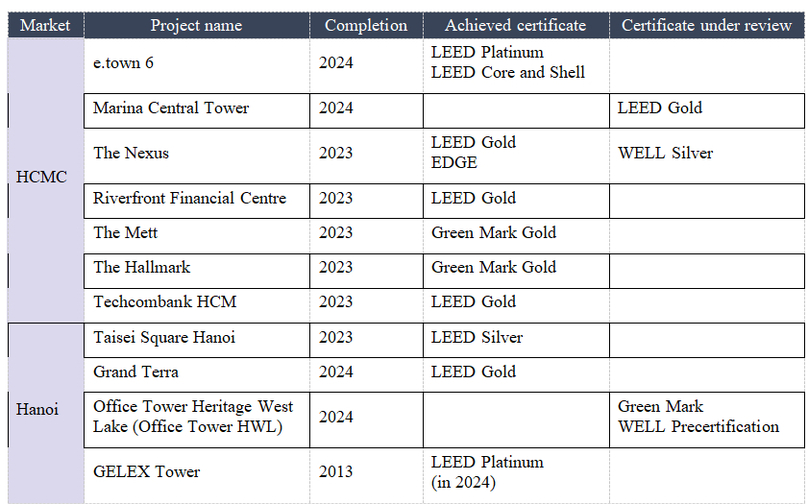
The industrial sector is also embracing sustainability, exemplified by recent green-certified projects such as Hitachi Energy’s factory in Bac Ninh and the Lego factory in Binh Duong. Developers are increasingly prioritizing eco-friendly practices, while rising market demand is influencing investment decisions favoring green projects.
Foreign Investment Trends
Despite a global slowdown in foreign direct investment (FDI), Vietnam has maintained a steady influx, with registered FDI reaching $31.38 billion by November, marking a 1% year-on-year increase. Though Vietnam’s FDI growth is modest against the backdrop of global economic fluctuations, the country’s appeal remains robust among foreign investors.
Realized FDI in the first 11 months hit $21.68 billion, reflecting a 7.1% increase over the previous year. Particularly noteworthy is the real estate sector, which has experienced an impressive growth in accumulated registered FDI of 89.1% year-on-year, amounting to $5.63 billion.
This strong influx indicates Vietnam’s increasing attractiveness to foreign investors, propelled by favorable policies, an expanding population, increasing urbanization, and a demand that outpaces supply.

Throughout these shifts, David Jackson, principal and CEO of Avison Young Vietnam, reflects on the recent developments: “Significant changes in 2024—policies, investment trends, and the business landscape—provide ample reasons for optimism in Vietnam’s real estate market. As positive signals emerge, now is the time to reinvigorate capital flows into real estate transactions and welcome the new growth cycle.”