
Despite having 18 Free Trade Agreements (FTAs) in place—17 already in effect and covering nearly 90 percent of global GDP—Vietnamese enterprises are utilizing tariff preferences at only 30 to 40 percent.
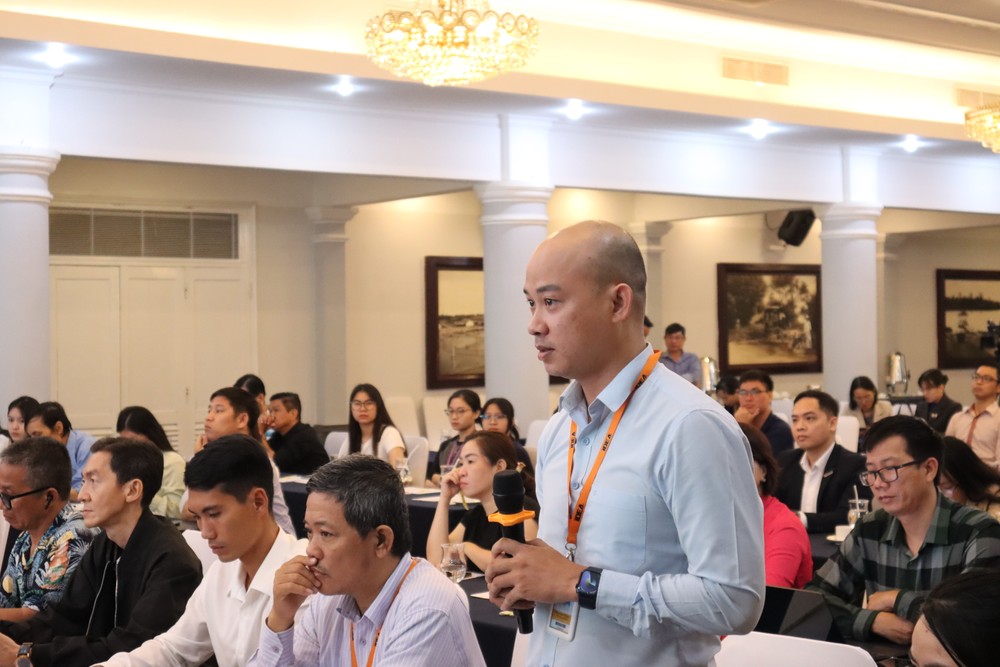
A seminar held on September 25 in Ho Chi Minh City addressed a surprising paradox: although Vietnam has signed 18 FTAs, with 17 currently in effect covering almost 90 percent of global GDP, local enterprises are only leveraging tariff preferences in about 30 to 40 percent of cases. This figure paints a picture of extensive opportunity coupled with significant underutilization.
Broad Market Access, Limited Benefits
During the seminar, Ms. Bui Hoang Yen, Head of the Southern Office of the Trade Promotion Agency under the Ministry of Industry and Trade, emphasized that Vietnam’s integration into the global economy has granted access to over 60 major markets worldwide. Key agreements such as the EU-Vietnam Free Trade Agreement (EVFTA), the Comprehensive and Progressive Agreement for Trans-Pacific Partnership (CPTPP), and the Regional Comprehensive Economic Partnership (RCEP) have propelled Vietnam’s total trade turnover to an impressive US$786.2 billion in 2024, marking a 14.3 percent year-on-year increase and generating a surplus of $24.8 billion. This growth has enhanced the position of Vietnamese goods in the global marketplace.

Some companies have successfully tapped into FTA benefits. For instance, Sienna Vietnam significantly lowered import tariffs on plastic packaging testing pens from 25–37.5 percent to zero under the EVFTA, enhancing their competitiveness in Europe. Meanwhile, Chien Thang Garment JSC achieved an impressive 90 percent of its revenue from the EU by sourcing raw materials domestically. ANTO Tea’s Hibiso brand also managed to penetrate markets in South Korea and the Netherlands by fully meeting established quality and origin standards.
Despite these successes, such instances remain relatively rare. On average, only 30–40 percent of Vietnam’s export turnover enjoys preferential tariffs. While utilization rates are higher in traditional markets—65.1 percent with India, 41.8 percent with China, and 40.1 percent within ASEAN—newer generation FTAs have seen concerningly low utilization: merely 1.8 percent for RCEP and 8.8 percent for CPTPP. These statistics raise eyebrows, particularly given Vietnam’s status as one of the region’s most open economies.
Several factors contribute to this situation. Many Vietnamese exports continue to rely heavily on major markets like the US and China, while low localization rates hinder firms from meeting robust rules-of-origin requirements. Furthermore, production processes are still heavily dependent on imported materials, exposing businesses to supply chain risks. As international standards regarding environmental practices, labor conditions, food safety, and intellectual property continue to evolve and tighten, compliance costs have surged—often exceeding the capabilities of small and medium-sized enterprises (SMEs).
In the first half of 2024 alone, Vietnam recorded 57 alerts over banned substance residues in agricultural exports, reflecting an 80 percent increase year-on-year. High-profile produce such as dragon fruit, durian, and various spices faced rigorous inspections, indicative of stricter Sanitary and Phytosanitary (SPS) barriers. Ms. Dinh Thi Huong Giang from Grant Thornton Vietnam observed that many domestic enterprises lack financial transparency. Inadequate digitalization of accounting data and underdeveloped risk management systems hinder these firms from passing supplier audits, which demand stringent requirements on transparency, environmental, social, and governance (ESG) compliance, and risk management.
Synchronous Solutions Needed for Breakthrough
The government has enacted several measures, including Directive 38/CT-TTg, Resolution 93/NQ-CP, and the introduction of electronic certificates of origin, accompanied by an FTA Index to monitor local implementation. However, experts maintain that the initiative must come from the enterprises themselves. Companies need to focus on enhancing product quality, improving labor and environmental practices, and developing supporting industries to raise localization rates to meet the respective rules of origin.
Enhanced collaboration between domestic firms and foreign direct investment (FDI) enterprises could unlock synergies in compliance with origin requirements and management expertise. Innovative tools such as tariff lookup systems and blockchain-based traceability solutions may enhance transparency and improve market access. Additionally, increased State-backed financial support is critical for SMEs to meet the burdens of compliance costs.
Ms. Ho Thi Quyen, Deputy Director of the HCMC Investment and Trade Promotion Center (ITPC), confirmed that Ho Chi Minh City will continue to provide essential support for businesses through seminars, training, trade connections, and market intelligence. This approach aims to bolster competitiveness and build confidence in Vietnam’s path towards deeper global integration.
By Ai Van – Translated by Thuy Doan