
By Quang Minh
Sat, September 28, 2024 | 11:12 am GMT+7
Vietnam’s economy is showing promising signs of recovery, with the International Monetary Fund (IMF) projecting a growth rate of 6.1% for 2024. This forecast marks an increase from the previous estimate of 5.8% provided in April. Such a revision indicates a shift in the global economic landscape, showing confidence in Vietnam’s ability to navigate through challenges and capitalize on opportunities.
According to the IMF’s conclusions from the latest Article IV Consultation with Vietnam, released on a recent Friday, this anticipated growth is bolstered by several factors. Continued strong external demand, robust foreign direct investment, and supportive fiscal policies are expected to play crucial roles in fostering this trend.
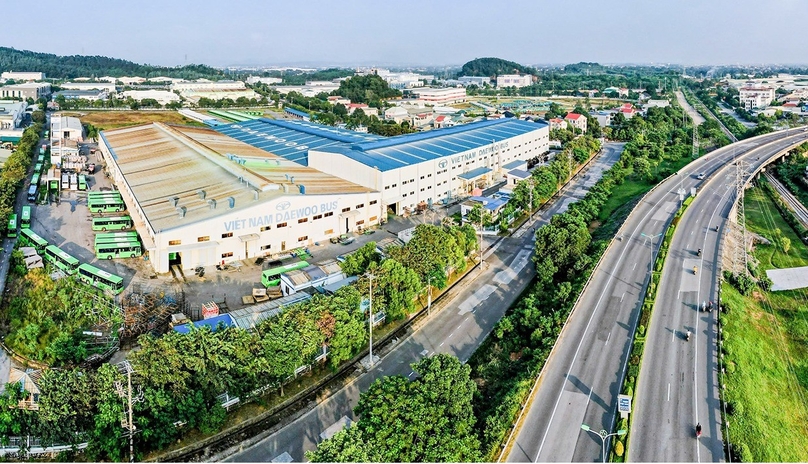
A view of Daewoo Bus Company in Vinh Phuc province, northern Vietnam. Photo courtesy of Vinh Phuc newspaper.
Further emphasizing this positive outlook, Vietnam’s GDP growth skyrocketed to 6.93% in the second quarter of 2024, leading to an impressive 6.42% growth rate for the first half of the year, as indicated by government data. Such momentum caught the attention of financial institutions, leading HSBC to revise its 2024 GDP growth projection from 6% to 6.5%, following insights from better-than-expected second-quarter performance.
August brought further optimism as the World Bank updated its projection, lifting it to 6.1%—a notable rise from the April estimate of 5.5%. Despite the positive adaptations from major institutions, the Asian Development Bank (ADB) remained conservative, maintaining its forecast at 6%. On the other hand, Singapore’s United Overseas Bank (UOB) adjusted its outlook downwards to 5.9% due to the impact of super typhoon Yagi, which had far-reaching effects across the region.
While these projections convey optimism, the IMF also highlighted ongoing challenges. The agency forecasted that domestic demand recovery would be gradual as businesses work to address high debt levels. Notably, the real estate sector faces a slower path to recovery, with its full revitalization expected over a medium-term horizon.
Inflation, measured by the consumer price index (CPI), is projected to hit 4.1% by the year’s end, slightly higher than previous estimates of 3.7%. Fortunately, this figure still aligns with the government’s target range of 4-4.5%, showing that authorities are managing economic pressures effectively.
However, caution remains necessary as the IMF warned of significant downside risks. A potential decline in exports, a critical engine for Vietnam’s economy, could arise from disappointing global growth. Add to that the persistent geopolitical tensions and the possibility of escalating trade disputes, which could further complicate Vietnam’s economic landscape.
Lastly, the IMF noted that while easy monetary conditions are in place, prolonged pressures on exchange rates could exacerbate inflation concerns. In particular, persistent weaknesses in the real estate sector and the corporate bond market could hinder banks’ capacity to provide credit. Should these conditions prevail, they could significantly impact economic growth and financial stability in the longer term.