
Understanding Vietnam’s Economic Landscape: A Bright Future
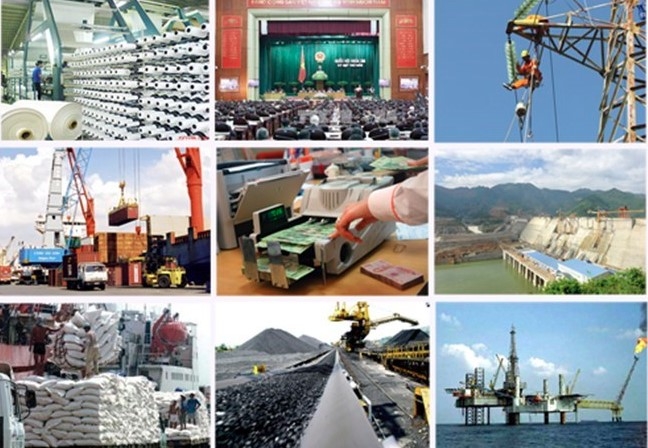
Positive Growth Outlook
Vietnam’s economic future is looking increasingly optimistic, as major financial institutions continue to raise their forecasts for the coming years. The Asian Development Bank (ADB) projects the country’s Gross Domestic Product (GDP) growth to hit 6.4% in 2024 and 6.6% in 2025. This anticipated growth stems from a robust recovery in the manufacturing and trade sectors, bolstered by supportive fiscal measures.
Similarly, the World Bank (WB) has also adjusted its forecasts upward, estimating a GDP growth of 6.1% in 2024 and 6.5% in 2025. Andrea Coppola, the lead country economist for Vietnam, Laos, and Cambodia at the WB, emphasizes that amidst global challenges like inflation and geopolitical instability, Vietnam remains one of the fastest-growing economies in the East Asia-Pacific region.
A significant factor contributing to this growth is the Vietnamese Government’s dedicated efforts to enhance the business environment. By effectively leveraging its strategic position between the U.S. and China, Vietnam has succeeded in attracting substantial foreign investment inflows, further asserting its economic stability and growth trajectory.
Bright Spot in Investment and Technology Attraction
In 2024, Vietnam is emerging as a magnet for international investors. Data from the General Statistics Office (GSO) reveals that foreign direct investment (FDI) disbursement reached $21.68 billion within the first 11 months of the previous year—a 7.1% increase from the same period in 2022. This marks the third consecutive year that FDI inflows have surpassed $20 billion, with sectors like renewable energy, real estate, and high technology standing out as hotspots for investment.
A landmark partnership with NVIDIA in the technology sector further underscores Vietnam’s rising profile in international markets. The collaboration aims to advance artificial intelligence (AI) initiatives in the country, with projections indicating that Vietnam’s AI market will reach $753.4 million by 2024, growing at a compound annual growth rate (CAGR) of 28.36% from 2024 to 2030. This promising trajectory highlights Vietnam’s adaptability in the face of technological evolution, primarily fueled by foreign investments.
Key drivers of Vietnam’s technological growth include a young, dynamic workforce and competitive costs, propelling the nation to rank third in Southeast Asia for investment deals and total startup funding. The favorable landscape has fostered the emergence of numerous domestic “unicorn” tech companies, marking significant advancements in AI and other sectors.
Long-Term Vision
In November 2024, the World Bank published an insightful report titled “Vietnam 2045: Enhancing Trade Competitiveness in a Changing World – The Path to a High-Income Future”. This roadmap outlines strategies for Vietnam to strengthen its position in the global value chain, aiming for high-income nation status by 2045.
Over the last 40 years, global integration has driven much of Vietnam’s development. The country currently stands among the most open economies in the world, with roughly 50% of its GDP tied to exports. Building on these achievements, Vietnam aspires to maintain an annual per capita GDP growth of around 6% for the next two decades.
However, challenges remain on the horizon, including risks related to climate change, natural disasters, and decelerating growth among major trading partners. The WB recommends that Vietnam invest heavily in human capital, infrastructure, and structural reforms to tackle these challenges while leveraging free trade agreements to open markets and reduce trade barriers.
Shantanu Chakraborty, Country Director of the ADB in Vietnam, agrees, asserting that public investment is crucial for sustaining economic growth. Such investment not only stimulates demand and job creation but also enhances sectors like construction, logistics, and transportation. Chakraborty emphasizes that these strategic investments are vital for mitigating reliance on monetary policy, thus bolstering economic resilience.
Furthermore, reforms aimed at improving business conditions will help Vietnam retain its competitive edge as more countries invest in developing world-class infrastructure. These initiatives form the backbone of Vietnam’s aspirations to maintain its development momentum and realize the ambitious growth targets set by its government.
In essence, Vietnam’s economic landscape encapsulates a blend of optimism and cautious strategy, positioning the nation as an emerging powerhouse on the global stage.