
Dong Nai’s Ambitious Free Trade Zone Plan
By VNA
Wed, September 3, 2025 | 8:43 PM GMT+7
The southern province of Dong Nai is setting its sights on an ambitious master plan for a Free Trade Zone (FTZ) that will leverage the upcoming Long Thanh International Airport, among other key infrastructures. This FTZ aims to integrate seaports, expressways, high-speed railways, and industrial parks into a cohesive economic driver for the region.
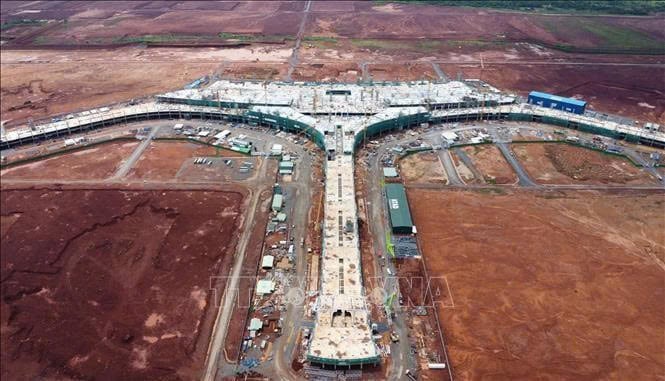
Overview of the Free Trade Zone
Encompassing more than 8,200 hectares spread across seven sites, the proposed Dong Nai FTZ will serve as a multifaceted hub. It is strategically located to connect with Long Thanh International Airport and Phuoc An Port, vital links for transportation and logistics. The FTZ will feature four distinct functional zones:
- High-Tech Industrial Production Area
- Logistics Hub
- Financial and Commercial Services Center
- Innovation Cluster
This diverse layout is designed to attract a wide range of industries and services, creating a vibrant ecosystem for businesses.
Investment Strategies and Mechanisms
To boost investment and establish the FTZ as a regional leader, Dong Nai plans to roll out eight policy groups and 29 special mechanisms. These initiatives aim to draw in investments from high-tech industries, logistics firms, and financial services, positioning Dong Nai as a crucial player in international trade.
Dr. Truong Minh Huy Vu, director of the Ho Chi Minh City Institute for Development Studies, advocates for building a green, digital, and smart FTZ model. He emphasizes the importance of aligning this development with institutional reforms and regional coordination to unlock Dong Nai’s full potential.
The Southeastern Free Trade Zone Complex
Moreover, Dong Nai’s FTZ is envisioned as the nucleus of a broader Southeastern Free Trade Zone (SEFZ). This multi-polar growth area will include complex links between the Long Thanh logistics-industrial-airport free zone, the Cai Mep-Thi Vai free port, and an international financial and trade center in Can Gio, Ho Chi Minh City.
Vu highlights the successes of similar models in global cities like Dubai, Shanghai, and Incheon, which have effectively attracted foreign direct investment (FDI), spurred high-tech production, and achieved remarkable GDP growth.
Strategic Connectivity and Logistics
A key advantage of Dong Nai is its planned connectivity between Long Thanh Airport, the Cai Mep-Thi Vai seaport, and existing industrial parks. This robust infrastructure is expected to position Dong Nai as a strategic logistics and export hub in the southeastern region of Vietnam.
For effective operations, Vu recommends the implementation of a paperless, single-window electronic management system, alongside clear decentralization in planning and investment licensing. He also proposes the formation of a regional development coordination board for the Southeast to enhance collaborative planning and budget allocation.
Strengthening Service Industries
Assoc. Prof. Dr. Tran Kim Chung, scientific secretary of the Central Theory Council, underscores Dong Nai’s strengths in service industries. The integration of Long Thanh Airport and the FTZ is expected to create two powerful growth engines for the province, centered around the urban service area linked to the airport.
The completion of Long Thanh Airport, once the largest in Southeast Asia, is anticipated to catalyze significant investment and enhance infrastructure connectivity, energizing the socio-economic landscape of the region.
Attracting Strategic Investment
Experts agree that to maximize the growth potential from aviation, logistics, trade, and urban development, Dong Nai must adopt breakthrough policies to attract strategic investors, particularly in high technology sectors.
Ho Van Ha, Vice Chairman of the provincial People’s Committee, revealed that the FTZ is estimated to attract around $16 billion in investment. Public funding will account for roughly 5%, while domestic private investment is expected to contribute 40%, with foreign direct investment making up the remaining 55%.
With these comprehensive plans and insights, Dong Nai is clearly positioning itself as a vital economic hub in Vietnam, ready to embrace the future of trade and investment.