
The dream of securing a “good job with high pay” has become increasingly elusive for workers in Vietnam as automation and artificial intelligence reshape the job landscape. Amidst this transformative wave, the complexities surrounding the workforce and its capabilities are coming to the fore.
Vietnam, over the past three decades, has undergone significant changes through its doi moi (renovation) policy, positioning itself as a “rising star” within the global economy. The shift towards a labor-intensive outsourcing model created waves of employment for untrained workers, helping the country transition into a low-middle income economy. However, this model has persisted for too long without adequately preparing the workforce for a transition to a more advanced development strategy, a crucial step toward attaining high-income status.
To evolve, Vietnam needs to invest robustly in education and training, as well as in science and technology development. According to Pham Manh Hung, a lecturer at the Economics Institute of Hanoi National University, the current investment levels for these sectors are alarmingly low. The Research and Development (R&D) budget for 2023 accounted for just 0.4% of Vietnam’s GDP—significantly lower than China’s 2.4%. In terms of higher education, Vietnam allocated only 0.18% of GDP in 2020, especially contrasted with Malaysia’s 1.13% allocation. This lack of investment is tantamount to neglecting the backbone of sustainable economic growth.
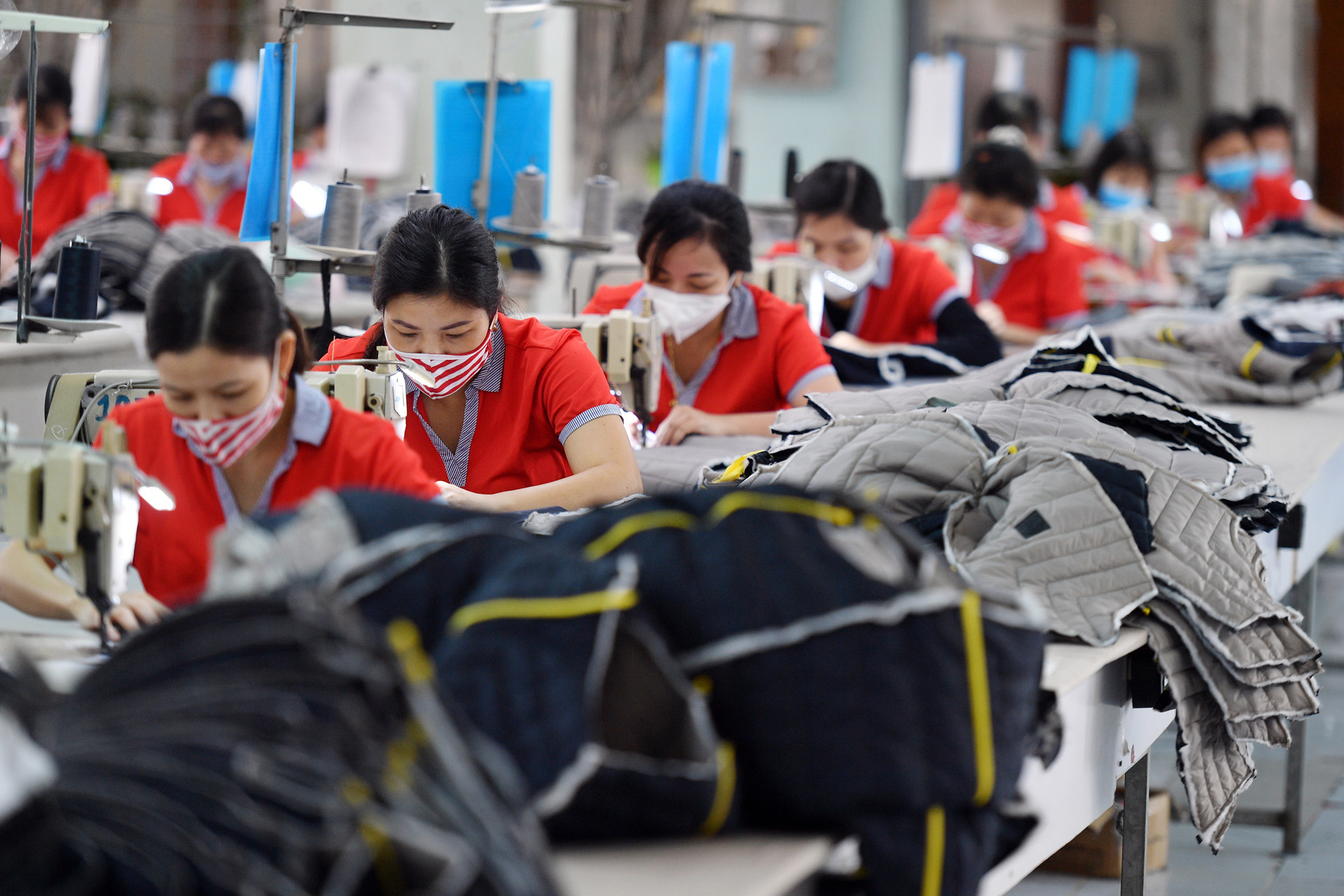
The dependency on outsourcing and assembly for foreign businesses has placed Vietnam in a precarious position. While the textiles, garments, footwear, and electronics sectors thrive, the workforce is largely engaged in labor-intensive roles, which tend to be low-skilled and command lower wages. This “muscle over brain” paradigm results in a workforce that is underqualified to innovate or elevate the technological content of products produced. Consequently, the technological edge needed to transition into higher-value manufacturing remains sorely lacking.
The figures paint a stark picture. By 2021, only 26% of the labor force had received formal training, with a mere 12% holding higher education degrees. More worrying is that over 73% of workers were untrained, while informal workers comprised 68.5% of the total workforce, accounting for around 33.6 million individuals. Among these informal workers, over 61% only possessed a primary education, illustrating the profound educational gaps that exist.
This scenario leads many workers into a troubling predicament of “bad skills, bad jobs, and bad pay”. In fact, only about 10% of workers currently enjoy good jobs with accompanying high salaries, a stark contrast to the 60% seen in Singapore. Moreover, roughly 75% of Vietnamese workers express that their earnings barely cover basic living expenses, with a report from the Vietnam Labor Federation in 2023 highlighting the grim realities of worker income.
The plight is particularly severe for informal workers; 47% of whom earn below the region’s minimum wage. Statistics from 2021 show that the average monthly income for informal workers sat at VND 4.4 million, which is significantly less than the average of VND 8.2 million for formal workers. Low wages not only impact immediate living conditions but also limit opportunities for skill development, entrenching a cycle of low-skilled, low-paying jobs that stifles upward mobility.
This cycle contributes to the broader issue of national competitiveness. Vietnam’s productivity levels, ranked at a dismal 135th out of 180 surveyed countries in 2022, reflect this systemic deficiency. Productivity measures revealed that the nation achieves just 11.4% of Singapore’s productivity, approximately 35.4% of Malaysia’s, and 64.8% of Thailand’s. With low productivity, the urgency to raise minimum wages conflicts with maintaining international competitiveness.
Experts have issued stark warnings that reliance on a low-cost labor pool will eventually undermine Vietnam’s competitive edge. As automation and AI become more prevalent, the necessity of developing high-quality human resources becomes increasingly vital. The current economic model is at a crossroads, and the ability to adapt to these new realities will determine Vietnam’s future trajectory.
In light of these pressing challenges, Vietnam stands at a critical juncture. Balancing immediate economic needs with long-term ambitions for a skilled labor force will shape its capability to navigate the complexities of a rapidly changing job market in the age of technology.
Tu Giang