
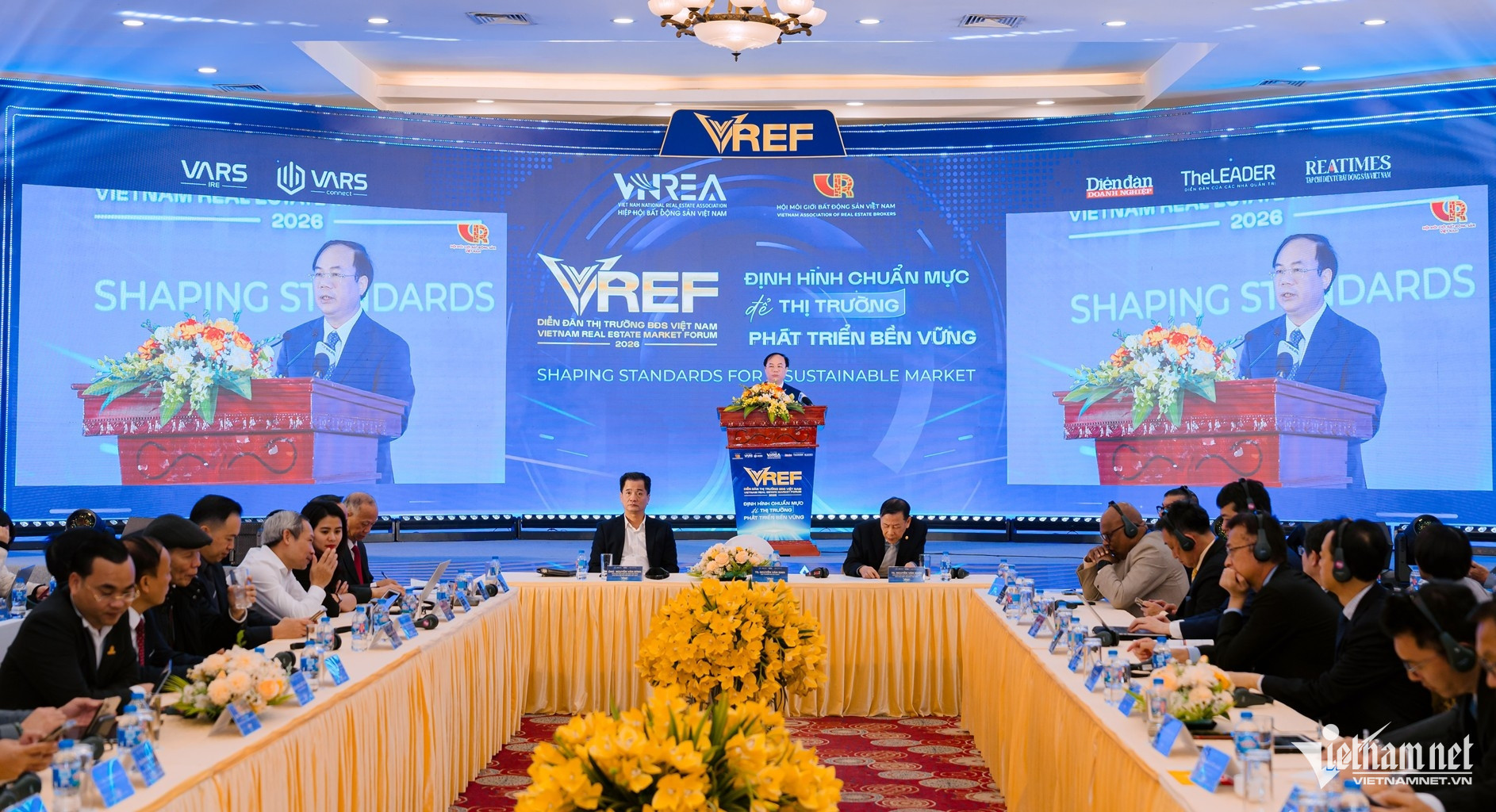
On January 9, the Vietnam Real Estate Market Forum (VREF) 2026 kicked off, organized by the Vietnam Association of Realtors. This event provided a robust platform for discussions on the current state and future trajectory of the Vietnamese real estate sector. Deputy Minister of Construction, Nguyen Van Sinh, highlighted the ongoing challenges that many real estate projects are facing, particularly those caught in legal entanglements or unfinished investments.
Government Initiatives to Unblock Projects
One of the key takeaways from the forum was the government’s commitment to resolving these issues. Deputy Minister Sinh reported that recent directives have successfully unblocked 926 projects, releasing around VND724 trillion into the economy. In 2026, the authorities aim to continue their focus on addressing the difficulties faced by the remaining stalled projects.
Current assessments reveal a concerning number of more than 2,000 projects still facing complications. These issues are categorized based on jurisdiction:
- Land Issues: 248 projects.
- Legal Authority Complications: 479 projects.
- Government Oversight Projects: 208 projects.
- Local Authority Issues: 1,104 projects.
This structured insight into project status aids in understanding the scope and depth of the challenges present in the market.
Legal Reforms and Their Impact
The Deputy Minister also noted that several laws have been amended to facilitate smoother operations within the real estate market. Key legal frameworks like the Land Law, Housing Law, and the Law on Real Estate Business have seen significant updates, focused on reducing administrative burdens and compliance costs. These changes aim to create a more conducive environment for businesses and improve service efficiency from local governments.
Resolutions passed by the National Assembly, such as Resolution No201, which introduces special mechanisms for social housing, have further paved the way for a more responsive housing development strategy. Notably, this has sparked considerable interest in the housing sector, with social housing now at the forefront of government initiatives, aiming to make it more accessible to low-income individuals.
The Social Housing Landscape
A significant highlight from Deputy Minister Sinh’s remarks was the ongoing social housing projects across Vietnam. Currently, there are 698 social housing projects underway, providing about 657,000 housing units. With an ambitious target to introduce an additional 160,000 social housing units to the market in 2026, the government plans to keep the pricing around VND20–25 million per square meter—deemed as aligned with market conditions.
However, despite these advancements, challenges persist. Pham Thi Mien from the Vietnam Institute for Real Estate Market Research and Evaluation (VARS IRE) reported that the market recorded over 128,000 newly launched housing products in 2025, which marks a substantial year-on-year increase. Yet, a mismatch between supply and demand continues to affect market dynamics, particularly in major cities.
Regional Disparities in Housing Supply
In southern regions, supply levels for affordable commercial housing are more balanced, leading to localized market improvements. Conversely, cities like Hanoi, Da Nang, and Ho Chi Minh City exhibit stark disparities. There, the surge in social housing has not kept pace with the growing demand for commercial housing, particularly those units priced above VND80 million per square meter.
Data reveals a burgeoning market segment where over 25% of new apartment units are priced above VND100 million per square meter, reflecting a shift toward luxury and ultra-luxury offerings. In stark contrast, affordable commercial housing options remain scarce, raising important questions about housing accessibility.
Upcoming Developments in Hanoi
In a separate yet significant development, Hanoi’s Vice Chair of the People’s Committee, Truong Viet Dung, recently signed a decision permitting Eresson Refrigeration Engineering JSC to repurpose a 4,950 sqm land plot on Pham Hung Road. This site will transform into a mixed-use project featuring offices, commercial spaces, apartments, and a hotel. Its strategic location along the Ring Road 3, adjacent to major residential and commercial complexes, is expected to enhance the vibrancy of the area, potentially setting a precedent for future urban development.
This detailed exploration showcases the complexities of Vietnam’s real estate landscape, emphasizing ongoing reforms, market dynamics, and the commitment to making housing more accessible for its citizens. The developments at the VREF 2026 serve not only as a forecast for the industry but also as a call to action for stakeholders across various sectors to collaborate and innovate for solutions that meet the needs of an evolving market.