
|
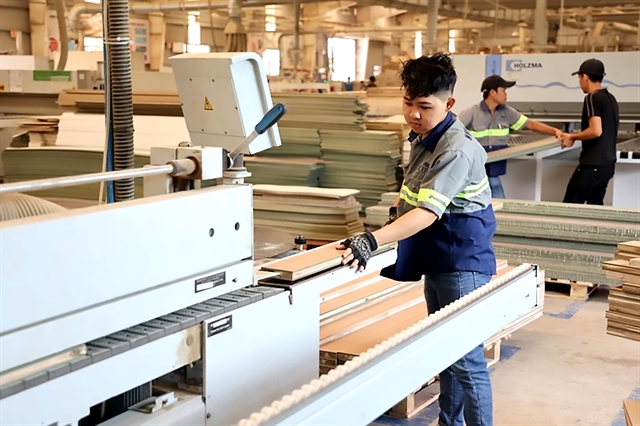
| Workers at the ILA Company producing wooden furniture for export. — VNA/VNS Photos |
HÀ NỘI — The Vietnamese wood industry presents numerous opportunities for recovery and growth in 2024. Central to this potential is the Forest Stewardship Council (FSC) certification, which serves as a critical gateway to global markets.
Trần Duy Khánh, the head of Marketing and Market Analysis at KNA Certification Company Limited (KNA Cert), pointed out that the U.S. stands as the largest consumer of wood products, with imports ranging from $24 to $25 billion annually. Remarkably, Vietnamese products account for 37% of total U.S. imports, constituting nearly 50% of Vietnam’s wood export turnover. This highlights the significant role that Vietnamese timber plays in international trade.
Despite this promising landscape, evolving U.S. standards increasingly emphasize sustainability. As a result, Vietnamese enterprises will need to align their practices and products with these stringent requirements to maintain and expand their market presence.
In contrast, the European market remains more challenging for Vietnamese wood products, with Vietnamese exports making up only 1.9% of total EU wood imports and 3.2% of Vietnam’s export turnover. The limited market share is attributed to varying customer preferences and the rigorous enforcement of EU Timber Regulation (EUTR).
The European Commission (EC) has been actively enforcing the EUTR legislation, which poses significant challenges for the Vietnamese wood industry as we approach the end of 2024. Khánh emphasized that obtaining FSC certification can provide a competitive edge within the EU. This advantage is further bolstered by the free trade agreement between Vietnam and the EU, which offers tax reductions and export incentives.
As the market evolves, it is imperative for the Vietnamese wood industry to adapt accordingly. Embracing sustainable forest development and ensuring transparent supply chains are vital components that can unlock lucrative market opportunities.
Multi-faceted Benefits
Vũ Thị Quế Anh, a representative of the FSC in Vietnam, reported that there are approximately 310,000 hectares of FSC-certified forests in the country, including over 20,000 hectares of untouched natural forest and planted forests. The trend of obtaining Forest Stewardship Council Chain of Custody (FSC/CoC) certifications is on the rise, with 1,730 units currently certified.
Moreover, Vietnam boasts other certified FSC raw material sources, such as over 9,000 hectares of bamboo and 6,000 hectares of rubber, with rubberwood being a significant export material in the global market. Anh emphasized that while the area under FSC certification is crucial, the sustainability of the products remains paramount.
In Vietnam, FSC-certified raw materials command a price premium of 10% to 15% compared to non-certified wood. “Premium buyers in the global market are willing to pay extra for products made from FSC-certified materials,” Anh stated, noting the growing recognition of the social and environmental values associated with such products.
According to Phạm Đình Sức, chief evaluator of KNA Cert, FSC has become the preferred standard for global consumers. Most wood processing and exporting enterprises in Vietnam seek FSC certification proactively due to increasing customer demand.
FSC operates in 123 markets globally, enabling participating enterprises to update their contact information and forge connections with potential customers through its official website. For small enterprises, joining FSC also opens doors to collaborate with international partners.
Tô Xuân Phúc, executive director of the Policy, Trade, and Finance Programme of Forest Trends, highlighted that two core requirements for wood products entering the EU market are the avoidance of deforestation and ensuring legality. Many regional customers are committed to various voluntary sustainable production and consumption standards, including the necessity for FSC sustainable forest management certification.
|
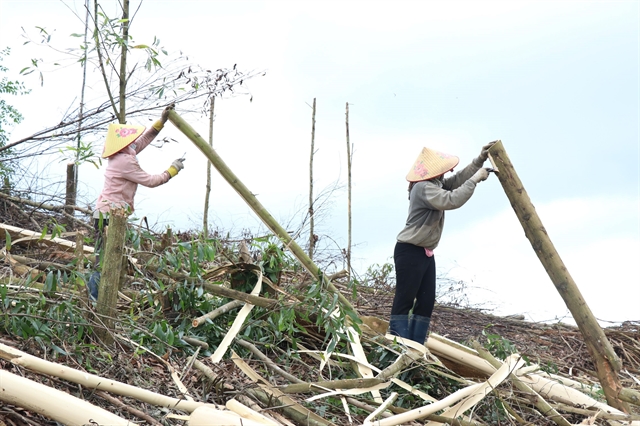
| Timber exploitation in Ea Trang Commune, M’Đrắk District, Đắk Lắk Province. |
Under the Voluntary Partnership Agreement (VPA/FLEGT Agreement) between Vietnam and the EU, Vietnam has committed to ensuring that all wood products exported to the EU are legally sourced. This necessitates significant adjustments from enterprises to meet compliance requirements.
With the EU Deforestation Regulation (EUDR) coming into effect in June 2023, the new rules will be applicable starting December 30, 2024. This regulation brings forth new challenges for Vietnam’s wood industry.
From December 30, 2024, agricultural imports from Vietnam, especially wood products destined for the EU, must be certified to verify that their origins are deforestation-free. Consequently, many wood processing enterprises in Vietnam are closely monitoring evolving EUDR regulations.
According to Anh, the EUDR mandates that listed products must originate from legal sources, extracted from areas free from deforestation or forest degradation. Notably, products produced on converted land after December 31, 2020, will not be accepted in the EU market.
Before export, these products will undergo rigorous scrutiny by the EU to determine their link to deforestation or forest degradation. “The essence of the EUDR regulation is to curb the influx of unregulated or illicitly sourced timber and wood products into the European market,” Anh explained. This timeframe up to December 2024 is crucial for Vietnamese enterprises to prepare and align with the EUDR regulations.
Turning Challenges into Opportunities
Ngô Sỹ Hoài, deputy chairman of the Việt Nam Timber and Forest Products Association (VIFOREST), noted that wood, coffee, and rubber are directly influenced by the EUDR regulation. He pointed out that the wood industry holds a unique advantage due to the implementation of the Forest Law Enforcement Governance and Trade Voluntary Partnership Agreement (FLEGT-VPA).
This bilateral trade pact establishes a legal framework for Vietnam’s wood and wood product exports to the EU market. The Vietnamese wood industry views the EUDR regulation as an opening, rather than an obstacle, believing that a well-executed approach could lead to an influx of Vietnamese wood products into the under-served European market.
Currently, Vietnamese wood products represent a mere 1.9% of the total value of wood imports in the EU. However, compliance with the EUDR could present smoother market access for Vietnam’s goods, especially in light of opposition from neighboring countries.
Despite the opportunities, Hoài acknowledged that enterprises face numerous obstacles in complying with EUDR regulations and stressed the need for specific guidance. The Ministry of Agriculture and Rural Development is actively negotiating with the EU to tackle these challenges and is preparing a forest soft map of Vietnam as a reference before the December 30, 2024 deadline.
Sustainable Raw Material Sources
|
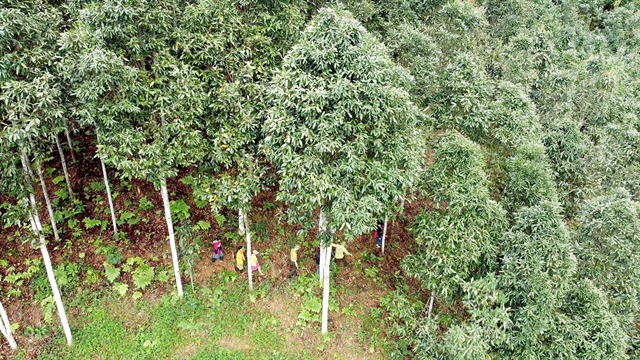
| A forest in Lào Cai Province. |
According to the Forestry Department, the global furniture market, valued at approximately $405 billion annually, will create a demand for wood and wood products totaling around $230 billion. Presently, Vietnam’s wood and wood product exports hold only a 6% share of the global market, demonstrating vast opportunities for growth and market development.
In the realm of wood processing for export, raw materials account for 40% to 60% of a product’s cost structure. Between 2017 and 2021, Vietnam’s demand for raw wood surged from over 34 to 41 million cubic meters annually, with domestic timber extraction representing approximately 77.4% of the overall supply.
However, Vietnam still imports 5 to 6 million cubic meters of round wood each year to meet its production needs, highlighting a heavy reliance on imported raw materials, as noted by Đỗ Xuân Lập, chairman of VIFOREST.
With over 5,000 wood processing enterprises exporting to 140 countries and territories worldwide, the Vietnamese wood industry significantly relies on imported raw materials, especially post the ban on natural forest logging in 2016.
By 2023, Vietnam had reduced its raw wood imports to just over $2.1 billion, marking a 28.3% decrease from 2022, while implementing systems to ensure the legality of imported wood, especially with an eye on EUDR regulations.
With over a million households engaged in the timber supply chain from planted forests, initiatives are underway to assist smaller-scale forest owners, often owning less than a hectare, in meeting EU regulatory standards.
Hoài pointed out that land use reforms in forestry have spurred forest planting in Vietnam, resulting in three to four million hectares of additional planted forests. With over 3.93 million hectares of such forests, Vietnam can supply over 30 million cubic meters of wood annually for processing and export, playing a crucial role in the industry’s growth and sustainability initiatives.