
By
Vu Pham, Minh Hue
Mon, December 16, 2024 | 8:17 am GMT+7
This year has been a mixed bag for the Vietnamese real estate market, as highlighted by Savills Vietnam. While large, established developers have thrived, the situation for other segments remains challenging. Notably, the focus appears to be on well-known projects, which have garnered significant customer attention and impressive reservation numbers.
Established names in the industry continue to dominate the landscape. For instance, projects launched by reputable developers consistently attract buyers, especially in urban areas. In contrast, many smaller companies focusing on affordable housing have struggled to maintain liquidity, despite rolling out various promotional and incentive policies to spark interest. This dichotomy has led to a rather stagnant market environment for those outside the circle of established giants.
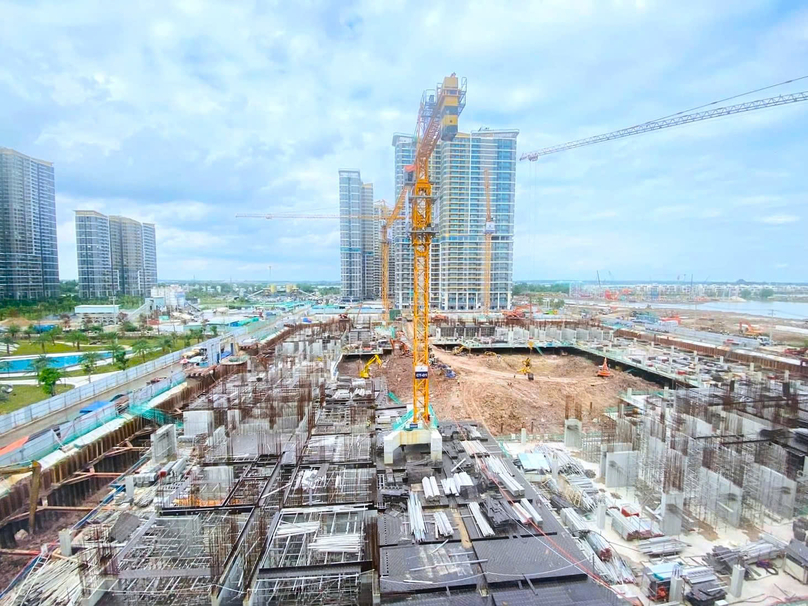
The Opus One: A Highlight in Ho Chi Minh City
The Opus One, a stunning apartment complex within the Vinhomes Grand Park urban area in Thu Duc city, Ho Chi Minh City, recently saw a successful launch of its OS1 and OS5 towers.
On November 16, Vinhomes debuted these two towers, quickly becoming a point of intrigue for buyers. The development consists of four high-rise towers, each towering 32-34 floors, set on over 2.3 hectares of land. With a starting price exceeding VND83 million (around $3,300) per square meter, Vinhomes reported selling over 500 units within the first 24 hours—a testament to the enduring appeal of well-planned projects.
The southern real estate market continued to buzz with activity toward the end of November, highlighted by the successful launches of the Eaton Park project by Malaysian developer Gamuda Land and Masteri Grand View by Masterise Homes, both situated in Thu Duc city. These developments achieved remarkable milestones, generating around 2,700 and 4,200 reservations, respectively, with selling prices that exceed VND100 million (approximately $3,960) per square meter.
Several other notable players, including CapitaLand and Phu My Hung, also made gains during this period, successfully drawing consumer interest with luxury products. Meanwhile, the Nobu Residences Danang project launched 264 high-end units in Hanoi, and they reported swift sales of over 82% shortly after launch.
Although some affordable housing projects created a buzz, many other developers faced maximum challenges with low liquidity levels, even with attractive incentives in place. Buyer caution persists, limiting the potential of various real estate offerings. This phenomenon suggests a sector in need of revitalization and confidence restoration.
Market Recovery Indicators
The chief investment officer and director of consulting and project development at DKRA Group, Vo Hong Thang, noted a tentative, yet positive, recovery during the initial months of the last quarter. Transactions appeared to improve, particularly for projects with complete legal status and those developed by trusted investors. In Southern Vietnam, 110 projects listed 12,599 units, and sales reached 1,571 units—a remarkable 93% year-on-year increase.
The following month yielded a further 113 projects with 13,681 units, showing an increase of 5.4% year-on-year, with 2,011 units sold—a double count compared to the previous year. Thang confidently projects continued interest in residential properties, particularly in densely populated urban centers like Ho Chi Minh City (HCMC) and Hanoi, predicting spillover demand in adjacent provinces. The apartment market, in particular, remains a driving force in both supply and sales, showcasing the persistent demand for modern living spaces.
Despite these positive indications, growth within the sector has not matched expectations than many had hoped for. A more substantial recovery is anticipated around mid-2025 or early 2026, contingent upon addressing existing market backlogs. This realization highlights the complexities that continue to plague real estate, requiring strategic planning and execution.
Expert Nguyen Hoang echoed sentiments of cautious optimism regarding the southern market—though advancements are observable, market dynamics still remain delicate. Legal clearances for several projects in HCMC signal positive signs for future developments, which can potentially bolster demand moving forward, even as property prices have generally risen this year.
With secondary market transactions increasing and prices reflecting growth since the second quarter, many developers are now launching new projects with enthusiastic receptions. The expectation is that HCMC and its surrounding areas will present up to 25,000 new apartments ready for purchase before the year concludes. However, Hoang also pointed out the continued challenges surrounding the implementation of the new Land Law, which remains ineffective in showcasing immediate impacts on the market. Such laws typically require six months for meaningful integration, indicating a waiting period for any substantial cultural shifts within the sector.
Despite ongoing discussions and efforts in the affordable housing segment, tangible breakthroughs seem limited. While a meager number of projects have commenced, they are predominantly smaller-scale undertakings. Consequently, the ambitious target of one million affordable homes nationwide and several hundred thousand in HCMC by 2030 may remain elusive without significant and strategic advancements.
According to Savills Vietnam’s analysis, 2024’s supply of apartment and land-attached real estate in HCMC marks the lowest levels observed over the past five years. In light of these trends, many new projects launched this year catered primarily to mid-range and higher markets, affecting their sales performance adversely, given the current economic context.
The dual pressures of high pricing and severely limited supply complicate the landscape for buyers, further entrenching the industry’s roadblocks. Ultimately, the state of the market in Vietnam demands a nuanced approach—one that balances growth ambitions with pragmatic solutions to existing challenges.