
Vietnam: A Rising Hub in Global Smart Manufacturing
Vietnam is rapidly emerging as a pivotal hub in the global shift towards smart manufacturing, attracting significant foreign investment and enhancing its high-tech industries. The recent Vietnam Global Manufacturing Forum 2025 (VGMF 2025) in Hanoi highlighted the country’s growing role in international supply chains, showcasing its potential for economic transformation and technological advancement.
Expanding Global Operations
As international corporations expand their operations, Vietnam’s position in the global supply chain is becoming increasingly vital. Trinh Huy, Deputy General Director of Chery Vietnam, emphasized that Vietnam is seamlessly integrating into this framework. For industry leaders like Chery Automobile, Vietnam plays a key role in their globalization strategy, a sentiment echoed across multiple sectors from high-tech electronics to automotive manufacturing.
Major Players in Vietnam
Several global giants are establishing substantial production chains in Vietnam. Companies such as Samsung, Foxconn, and BYD are clustered in the northern regions, focusing on consumer electronics and semiconductors. Meanwhile, southern Vietnam hosts prominent players like Haier, Midea, and Adidas, who are solidifying their presence in home appliances and textiles. This diverse influx underscores not only Vietnam’s capacity for varied production but also its strategic importance in global manufacturing networks.
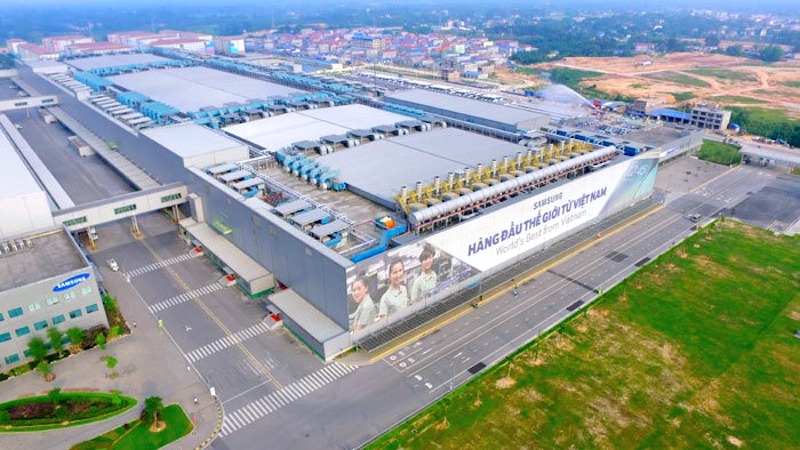
Photo: Samsung Electronics
Advancements in Automation and Digitalization
The VGMF 2025 participants underscored Vietnam’s movement towards automation and digitalization, particularly in high-tech sectors such as electronics, automotive, and renewable energy. Trinh Huy noted that this shift presents significant opportunities for Vietnamese enterprises, enhancing collaboration and manufacturing capabilities. Such advancements not only streamline processes but also position Vietnam as a forward-thinking player in the global economy.
Foreign Direct Investment Surge
According to the Ministry of Finance, Vietnam attracted nearly $6.9 billion in registered Foreign Direct Investment (FDI) in the first two months of 2025—an impressive 35.5% increase year-on-year. This surge in FDI is complemented by a robust trade turnover that surpassed $127 billion, reinforcing Vietnam’s role in global trade. The growth trajectory continued into 2024, where total trade rose 15.4% to approximately $786.3 billion.
Electronics emerged as a leading export category, with computers and components alone contributing $72.6 billion to the economy, marking a 26.6% increase from 2023. Mobile phones and accessories also showcased resilience, achieving $53.9 billion, while machinery and equipment exports reached $52.3 billion.
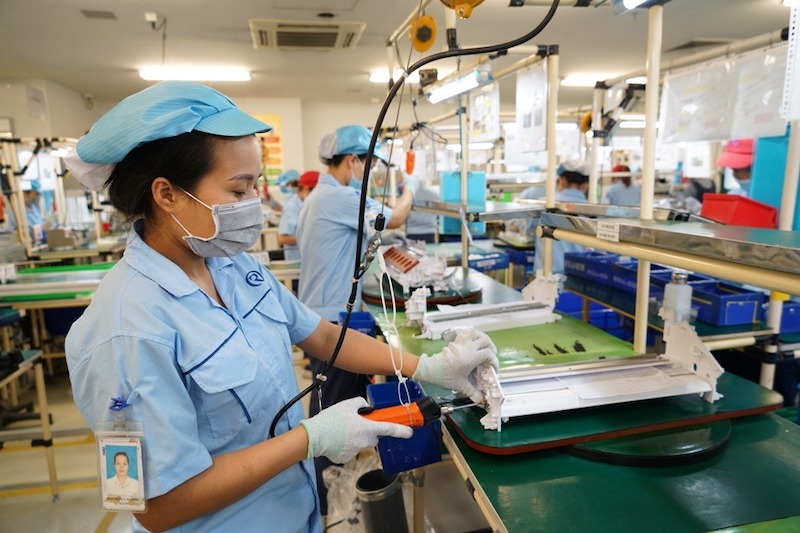
Photo: Pham Hung/The Hanoi Times
Competitive Advantages and Policy Adaptation
Nguyen Mai, Chairman of the Vietnam Association of Foreign Invested Enterprises (VAFIE), highlighted Vietnam’s competitive edge in attracting foreign investment despite geopolitical and economic uncertainties. With 17 next-generation free trade agreements (FTAs), Vietnam is adapting its policies to meet international standards, streamlining governmental operations to foster a business-friendly environment.
Foreign investors view these advantages as significant incentives to enter the Vietnamese market. The tailored policies not only attract investment but also enable the government to select projects that align with the national FDI strategy.
Challenges Ahead
While prospects look bright, challenges remain. Vietnam must effectively navigate the transition to smart manufacturing, strengthening its position within the global value chain while ensuring competitiveness. Industry insiders acknowledge the need for a long-term strategy focused on developing domestic supply chains, enhancing workforce skills, and forging international partnerships.
Ngo Lang Van pointed out that Vietnam currently relies heavily on imported raw materials due to underdeveloped local supply chains. This dependence can inflate costs and diminish supply chain flexibility. Strengthening localized supply chain capabilities will be essential in maintaining competitive advantage.
Collaboration with Supply Chain Leaders
To foster the development of smart manufacturing ecosystems, experts recommend that Vietnamese firms collaborate with supply chain leaders from nations like China, Japan, and South Korea. Such partnerships can facilitate advancements in semiconductors and pave the way for AI-driven digitalization.
By embracing these collaborative strategies and focusing on innovation, Vietnam is poised not just to participate in the global manufacturing shift but to lead it, shaping the future landscape of high-tech industries worldwide.