
Việt Nam is rapidly emerging as a key player in the global industrial and digital landscape, thanks to a remarkable surge in foreign direct investment (FDI). This transformation from a low-cost manufacturing hub to a sophisticated, technology-driven economy has captured the attention of international investors and industry leaders alike.
|
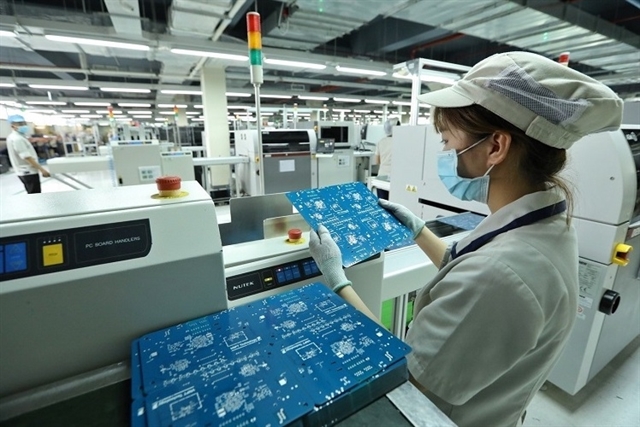
| A production line of Vietnamese technology equipment products. — VNA/VNS Photo |
### High-Value Industries Driving Growth
The shift in FDI focus toward high-value sectors is noteworthy. These include electronics, automotive components, semiconductors, and green technology. According to Troy Griffiths, deputy managing director of Savills Việt Nam, “Việt Nam has evolved from traditional manufacturing, where companies were primarily focused on low labour costs, to a high-tech, skill-intensive nation with advanced production capacities.” This evolution signifies a dramatic improvement in the quality and value of the products being manufactured in the country.
### A Surge in Foreign Investment
Countries such as South Korea, Singapore, and Japan are leading the charge in investing in Vietnam’s high-tech and high-value production. Currently, these sectors account for approximately 63 percent of total FDI inflows, marking a significant departure from the traditional emphasis on low-cost manufacturing. This shift is transforming the region’s economic landscape, elevating Việt Nam’s profile on the global stage.
### Industrial Real Estate in High Demand
The increased investment in high-value industries is expected to sustain a robust demand for industrial real estate by 2025. As companies seek modern facilities equipped to handle advanced manufacturing processes, the need for new warehouses, logistics centers, and ready-built factories is at an all-time high. In 2024, there has already been a remarkable 31 percent increase in the supply of ready-built factories and warehouses, with occupancy rates soaring above 80 percent in prime locations.
### Infrastructure Development as a Catalyst
Việt Nam’s ambitious infrastructure plans further support this industrial growth. The government is channeling significant investment—about 7 percent of its GDP—into key projects. These include the North-South Expressway, the Long Thành International Airport, and deep-water ports like Cái Mép in Bà Rịa-Vũng Tàu. Such infrastructure improvements are vital for enhancing the country’s logistics capabilities, making it easier for businesses to operate efficiently and meet growing demand.
### The Role of Digital Connectivity
In tandem with these developments, digital connectivity remains a critical focus area. The expansion of 5G networks and the development of data centers are helping to foster growth in e-commerce and logistics. As the digital economy continues to burgeon, companies are more inclined to invest in Vietnam, further fuelling the demand for modern industrial spaces.
### Competitive Warehousing Costs
Interestingly, Việt Nam’s warehousing costs remain highly competitive, averaging just US$5.6 per square meter. This affordability, combined with increasing occupancy rates, makes the country an attractive destination for businesses seeking to expand their operations. As the e-commerce sector booms and FDI flows in, the logistics space is quickly becoming a cornerstone of Việt Nam’s economic revitalization.