
The landscape of e-commerce in Vietnam is undergoing significant transformation, especially with the recent revisions to the Law on E-commerce. The Government has mandated that all concerns and recommendations from National Assembly deputies be thoroughly reviewed and incorporated into the revised draft. This comprehensive approach reflects a commitment to enhance the legal framework of e-commerce, ensuring that it aligns with both current practices and future needs in the digital economy.
In an important session before the National Assembly, Minister of Industry and Trade Nguyen Hong Dien articulated these revisions and provided detailed explanations on the changes made in response to legislative feedback. His presence underscored the deliberate effort of the Government to ensure transparency and responsiveness to legislative scrutiny.

Minister of Industry and Trade Nguyen Hong Dien delivers the report on revisions and explanations before the National Assembly.
Clarifying Obligations for Social Media E-Commerce and Livestreamed Sales
One of the key highlights of the revised law is the clear delineation of responsibilities among participants in livestreamed sales, which includes sellers, hosts, and platform operators. This structure aims to enhance transparency, fortify legal accountability, and assist in the supervision and enforcement of e-commerce activities. The deliberation has also established social media platforms as a distinct category, imposing tailored obligations that reflect their unique operational contexts. This ensures that the regulations do not merely impose mechanical governance but address specific challenges, particularly in areas like content management and consumer protection.
Strengthening Seller Identification and Market Transparency
Addressing concerns about the proliferation of counterfeit and infringing goods, the law emphasizes enhanced seller identification processes via the national electronic identification system (VNeID). This is aimed at increasing market transparency and helping tax authorities combat revenue loss. The Government remains committed to utilizing existing digital infrastructures and state data to simplify administrative procedures for citizens and businesses, while at the same time ensuring that regulatory authorities have robust enforcement mechanisms at their disposal.

The National Assembly convenes a plenary session on December 10.
Responsibilities of Foreign Platforms Operating in Vietnam
In line with the feedback received from deputies, the law outlines specific requirements for foreign e-commerce platforms operating within Vietnam. These revisions are tailored to reflect the operational models of such platforms and include stipulations around appointing authorized representatives or establishing legal entities within the country. This approach balances state management with international obligations while ensuring the protection of consumer rights.
Ensuring Timely Issuance of Implementing Regulations
Post-adoption of the law, the Government is set to issue a clear implementation roadmap. This will encompass guiding documents that are both practical and consistent with related legislation, focusing on avoiding unnecessary administrative burdens. Plans emphasize risk-based supervision and data-driven post-inspection processes while assigning clear responsibilities for all stakeholders involved in e-commerce.
Addressing Detailed Recommendations from Deputies
Deputies made several specific recommendations including establishing transaction thresholds for foreign platforms, deposit requirements to guarantee consumer compensation, and effective reporting mechanisms. Minister Dien reassured that these suggestions have been incorporated into the revisions and will be explicated in forthcoming implementing decrees, ensuring alignment with various resolutions of the Party Central Committee and the National Assembly. The goal remains to streamline administrative activities, diminish compliance costs, and avoid bottlenecks in business operations.
“With a spirit of responsibility and receptiveness to feedback from National Assembly deputies, the Standing Committee, and appraisal agencies, the Government believes that the revised draft Law on E-commerce reflects greater coherence and aligns with Party and State policies. It aims to meet state management requirements in the digital economy while protecting consumer rights and ensuring a fair business environment,” Minister Dien asserted.
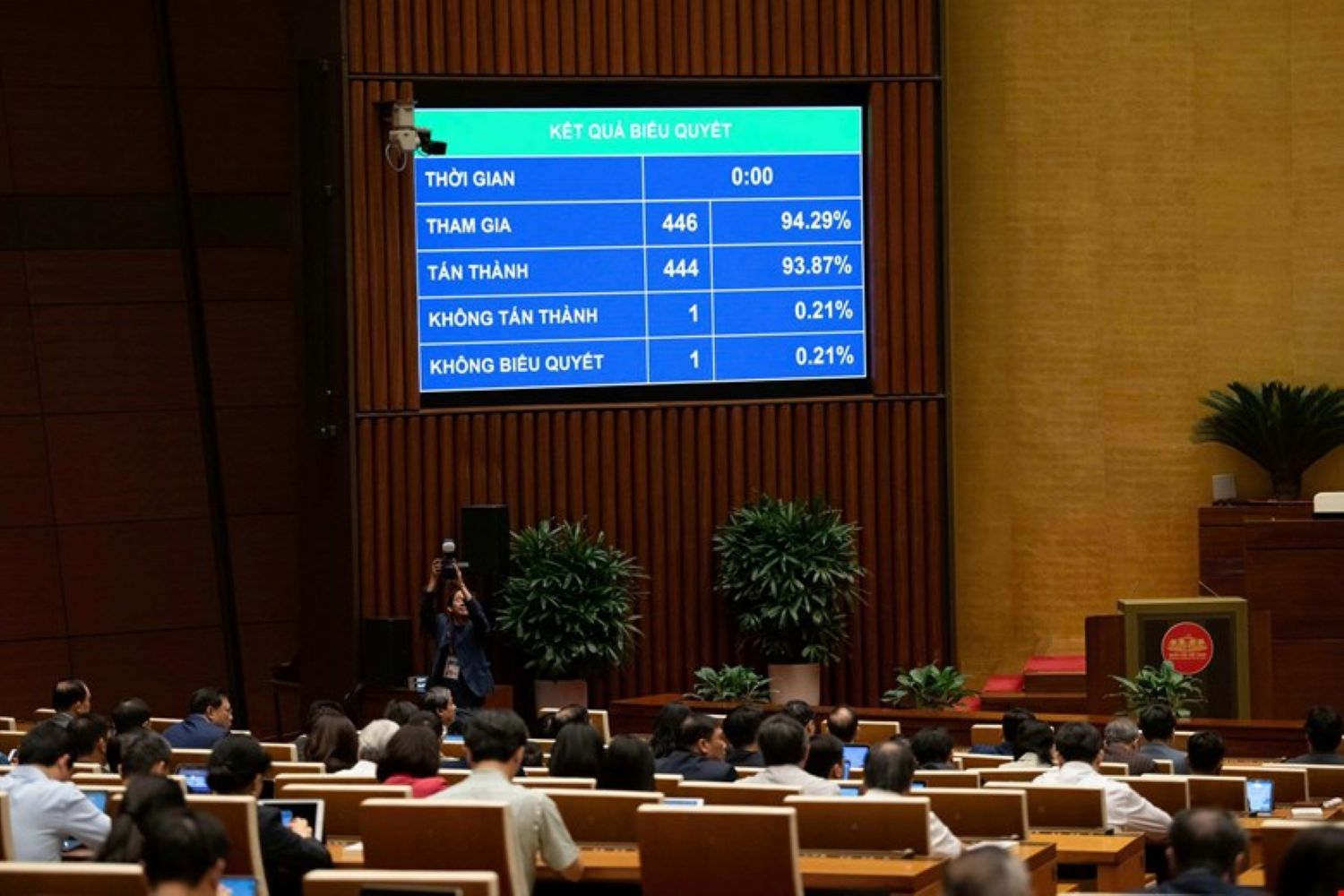
The National Assembly approves the E-Commerce Law, with 444 out of 446 deputies present voting in favor.
Scope and Entry into Force
The Law on E-commerce is characterized by its extensive framework, encompassing 7 chapters and 41 articles that regulate various aspects including e-commerce development policies, duties of participants in the e-commerce ecosystem, cross-border e-commerce activities, and the application of technology in regulatory enforcement. Applicable to both domestic and foreign entities engaged in e-commerce in Vietnam, this law is set to take effect on July 1, 2026, underscoring a commitment to developing a modern regulatory environment that adapts to the rapidly evolving digital marketplace.