
By Anh Minh
Sat, November 18, 2023 | 6:09 am GMT+7
The advancement of green industrial parks (IPs) and economic zones (EZs) is becoming an essential focus in Vietnam, drawing inspiration from successful global precedents. However, developers are increasingly calling for clearer regulations to support long-term investment in these sustainable initiatives.
The critical issues and opportunities surrounding this transition were explored at the Vietnam Industrial Park Forum 2023: Towards Green Growth, hosted by The Investor in Ho Chi Minh City on November 16, 2023.
The Shift to Eco-Industrial Parks
Nguyen Anh Tuan, the Editor-in-chief of The Investor, opened the forum by emphasizing the significant role of industrial parks and economic zones in Vietnam’s socio-economic development over the past 30 years. Since their inception, Vietnam has established 413 IPs, with 295 currently operational.
In line with the National Green Growth Strategy, numerous developers are increasingly focusing on sustainable and smart industrial solutions. Noteworthy examples include the Phu My 3 Specialized Industrial Park (PM3 SIP) in Ba Ria-Vung Tau and Nam Cau Kien IP in Hai Phong, along with green initiatives proliferating in regions like Ninh Binh and Da Nang.
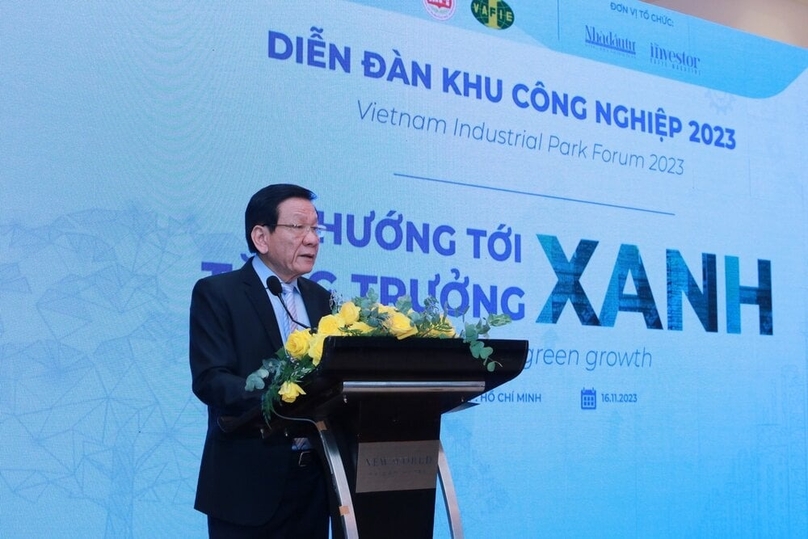
Nguyen Anh Tuan addresses the forum. Photo by The Investor/Le Toan.
Tuan, who is also the standing vice chairman of the Vietnam Association of Foreign Invested Enterprises, noted several challenges hindering this green transition. These include limited access to green financing, a lack of incentives for business interconnections, and complex procedures for establishing industrial parks.
Vuong Thi Minh Hieu, deputy head of the Economic Zones Department under the Ministry of Planning and Investment (MPI), spoke about Vietnam’s pilot programs aimed at converting traditional IPs into eco-industrial parks. These initiatives seek to align industrial activities with environmental stewardship, thereby enhancing community livability.
For the future, Vietnam plans to develop new eco-industrial parks that adhere to design and planning requirements aimed at attracting environmentally sustainable projects.
Nguyen Cong Ai, deputy general manager of KPMG Vietnam, stressed that ongoing, robust foreign direct investment will elevate the demand for industrial real estate and logistical support in the country’s key manufacturing regions.
Ai highlighted the evolution toward eco-industrial parks as a prominent theme for Vietnam, aligning with global trends. He noted that foreign investors are increasingly seeking urban-service IPs that cater to the diverse needs of workers, smart parks, and facilities with integrated logistics, warehouses, and ports.
Seeking Clearer Guidance for IP Development
During the panel discussions, Hieu pointed out that Decree 25, effective May 28, 2022, has significantly simplified the paperwork required for IP licensing, granting more autonomy to local governments in the licensing process. However, attendees raised concerns about the ambiguous legal framework surrounding new models of IPs, particularly greener options.
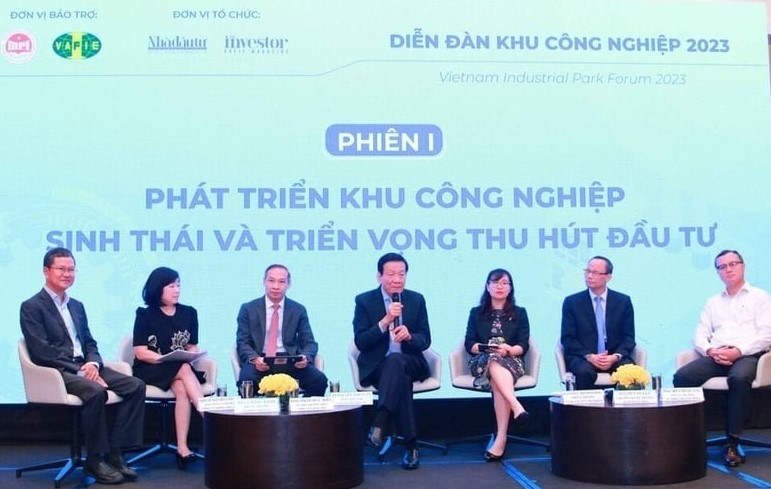
Nguyen Anh Tuan moderates a panel discussion. Photo by The Investor/Le Toan.
Ho Chi Quang, deputy head of the Zoning-Architecture Department under the Ministry of Construction, acknowledged local governments’ requests for adjustments to existing zoning schemes, particularly for the development of urban-service IPs. Can Van Luc, chief economist at BIDV, underscored the importance of clear administrative procedures, highlighting that many developers find the current regulations surrounding urban-service IPs to be confusing and imprecise.
Luc advocated for expedited adaptations to land price valuation decrees and more lenient regulations on the approval and licensing of large-scale IP developments requiring multi-phase investments. He emphasized the need for accessible resources detailing investment procedures, preferably available in both Vietnamese and English.

Vuong Thi Minh Hieu and Can Van Luc discuss IP regulations. Photo by The Investor/Le Toan.
Phan Duc Hieu, a member of the National Assembly’s Economic Committee, informed attendees that the draft of the new Land Law will enhance provincial governments’ empowerment in IP development planning and clarify the duration of land use rights for IPs.
“A clear legal framework is essential. Practical guidelines and manuals would significantly benefit developers,” Hieu emphasized.
Establishing Criteria for Green IPs and EZs
Kasahara Masayuki, chief representative of the Japan International Cooperation Agency in Ho Chi Minh City, suggested a collaborative approach among government agencies and IP developers to create criteria for sustainable IPs and EZs. Such a framework would be crucial for determining which IPs can be classified as green.
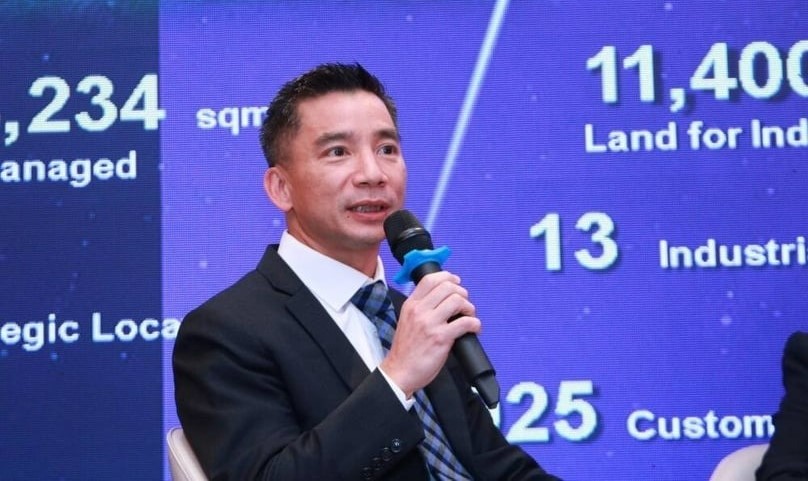
Nha Vinh Julien Nguyen discusses criteria for green IPs. Photo by The Investor/Le Toan.
Nha Vinh Julien Nguyen, country director of WHA Vietnam, noted that Thailand has developed a set of criteria for green and smart IPs, which in turn influences taxation regulations. WHA aims to implement standards focused on environmental protection and energy efficiency within its green and smart park developments, targeting high-value sectors such as electronics.
Nguyen Thi Thao Nhi, chairwoman of industrial real estate developer Thanh Binh Phu My JSC, emphasized the importance of environmental stewardship in their mission. PM3 SIP enforces strict green regulations, including water supply cuts for non-compliance, to ensure all investors adhere to sustainability standards.