
Strengthening Vietnam’s Climate Tech Funding Ecosystem
By Minh Tuan
Sat, August 17, 2024 | 9:17 pm GMT+7
Stakeholders in Vietnam’s climate tech sector are urged to collaborate and rapidly enhance the ecosystem for funding climate technologies. With Vietnam being one of the nations most vulnerable to climate change, significant investments are crucial for the country to reduce carbon emissions and achieve its net-zero commitments. Recent discussions highlight the urgent need for a more robust climate tech funding environment.
The Current Landscape
Thao Tran, CEO of New Energy Nexus Vietnam, expressed that the climate innovation ecosystem in Vietnam is still in its early stages. Since its establishment in 2019, Energy Nexus Vietnam has witnessed the challenges and the potential for growth in this sector. “One of the essential components is to promote a more dynamic impact investment market,” Tran stated. This would facilitate investment mobilization and business development for climate entrepreneurs.
In an effort to nurture this evolving field, the organization has initiated the “Investment Platform.” This includes a climate funding and investment report, networking meetups, and conferences. The collaboration with Clickable Impact Consulting Group has brought valuable insights to this initiative.
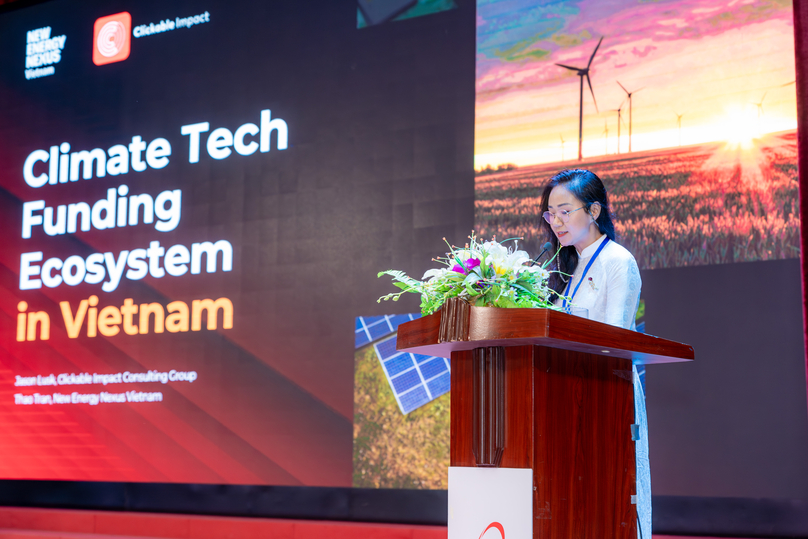
Thao Tran, CEO of New Energy Nexus Vietnam speaks at the Vietnam Climate Tech Investment Platform Networking Event, Hanoi, August 15, 2024. Photo courtesy of New Energy Nexus Vietnam.
Economic Implications
A joint report by Clickable Impact Consulting Group and New Energy Nexus points to alarming statistics. Climate change could cost Vietnam between 12-14.5% of its GDP annually by 2050, as indicated by World Bank data. This stark reality compels swift action and innovation.
Jason Lusk, Managing Partner of Clickable Impact, highlighted Vietnam’s budding entrepreneurial spirit. “Vietnam has become a hotbed of entrepreneurship,” he emphasized, particularly in the climate tech sector. In 2022, Vietnam secured 19% of all venture capital funding in Southeast Asia, a significant increase from just 3% in 2019.
Globally, climate tech investment represented 10% of all venture capital investments in 2023. This intersection of challenges and opportunities presents a promising foundation for developing a thriving climate tech ecosystem in Vietnam.
Current Startup Ecosystem
Vietnam currently boasts 49 active climate tech startups across various developmental stages—from ideation to market-ready solutions. However, the potential for innovation far exceeds the current landscape. Lusk remarked, “I firmly believe that Vietnam is capable of a lot more and will generate much more climate tech innovation over time.”
Between 2015 and 2023, climate tech startups in Vietnam received a total of $92.6 million in funding, averaging less than $2 million per startup over nine years. Despite the growing number of startups, climate tech funding accounted for only 4% of Vietnam’s total venture capital investment in 2023, trailing the global average.
Challenges in Funding
An analysis of the funding landscape revealed several gaps. While 28 startups have received very early-stage funding totaling $8.3 million, 16 have not advanced from seed funding. Only five have closed Series A rounds, and a mere two companies—Entobel and Logivan—have succeeded in reaching Series B, indicating the tough journey many companies face.
Lusk articulated the critical problem that these funding roadblocks represent. “We want to see more Vietnamese climate tech startups maturing and achieving these milestones,” he stated, underscoring the necessity for enhanced funding pathways.
Proposed Solutions
To fortify the climate tech funding ecosystem, Lusk emphasized the need to address key gaps: limited investable pipelines, restricted funding options, and insufficient government support programs.
-
Talent Development: The first area of focus is to cultivate better founder teams with experience, innovation, and business acumen equivalent to more robust sectors like e-commerce or gaming.
-
Public-Private Dialogue: Secondly, fostering dialogue between the government and startups is essential as regulatory frameworks around climate initiatives rapidly evolve. Insights into policy shifts will enable startups to pivot as needed.
-
Stronger Ecosystem Communication: Maintaining consistent communication and collaboration among stakeholders can spark new initiatives and foster a more dynamic investment environment.
By showcasing exemplary startups and creating appealing funding opportunities, Vietnam’s climate tech sector can become more attractive to both local and international investors. This would, in turn, lead to higher demand for climate tech solutions from significant multinational enterprises.
The Role of Collaborative Events
The recent Vietnam Climate Tech Investment Platform Networking Event, co-hosted by the U.S. Department of State and partners, highlighted the vibrant interaction among climate startups, investors, and industry experts to foster the growth of Vietnam’s climate tech sector.
This event marked a monumental step for the Coalition for Climate Entrepreneurship Hub (CCE Hub) in Asia and the second globally, aiming to catalyze climate innovation in developing economies. The CCE Hub’s inauguration in September 2023 has set the stage for more innovative solutions tailored to combat climate change.
The partnership with entities such as VMO Holdings and the Posts and Telecommunications Institute of Technology (PTIT) presents a robust framework for addressing the imperatives of climate entrepreneurship. By aligning resources and expertise, all stakeholders can work towards advancing sustainable investment solutions.
The evolving climate tech landscape in Vietnam is laden with challenges and ripe with potential. Through collaborative efforts and innovative strategies, stakeholders can harness this momentum to create a resilient framework for climate tech funding in the years to come.