
Estimated at VND26.7 trillion (US$1.05 billion), the 50-kilometer road project will be built under a public-private partnership (PPP) model.
THE HANOI TIMES — Hanoi is set to enhance its connectivity and logistics capacity with the proposed road to Gia Binh International Airport in the northern province of Bac Ninh. This significant infrastructure project aims to support the burgeoning logistics services required for efficient airport operations.
Recently, Duong Duc Tuan, Deputy Chairman of the Hanoi People’s Committee, gave the green light to a detailed investment plan after hearing reports from the Department of Planning and Architecture. The plan outlines the projected 50-kilometer expressway running through 28 kilometers of Hanoi, designed specifically to facilitate high-speed traffic with ten lanes and a total width of 120 meters.
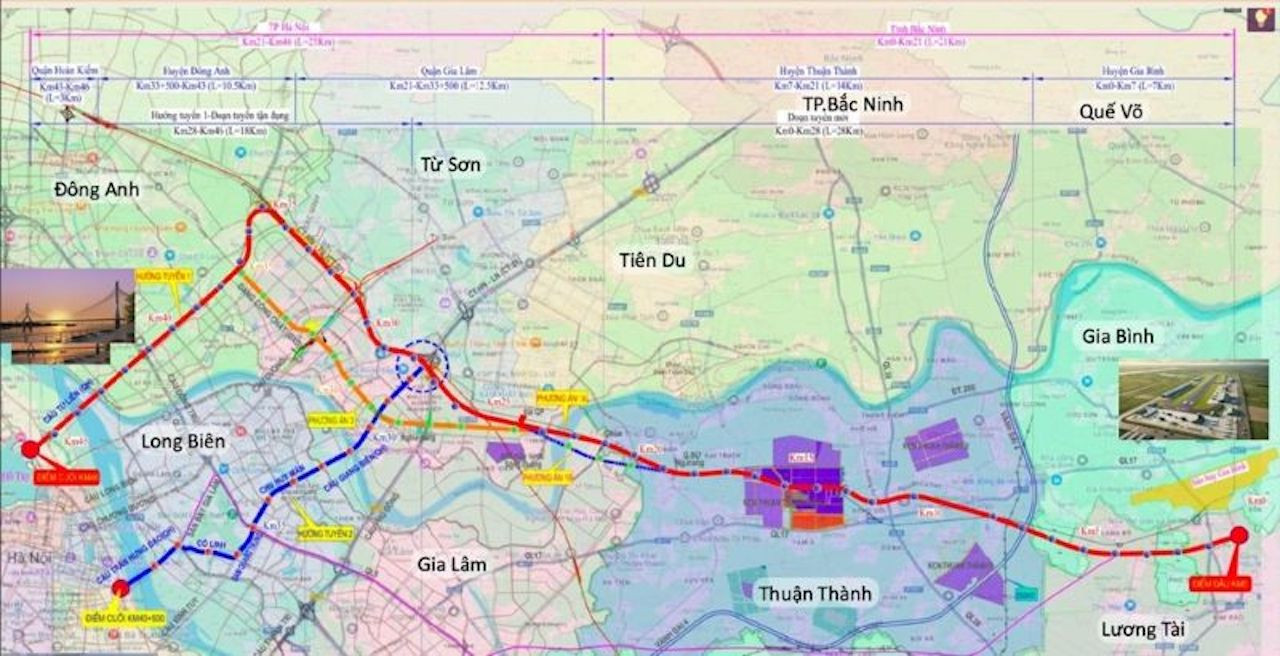
This ambitious endeavor, estimated to cost VND26.7 trillion (US$1.05 billion), will be developed through a public-private partnership (PPP) model, ensuring that both public resources and private investments help bring this vital project to fruition. By connecting with existing transportation networks already established in approved planning schemes, the expressway aims to streamline travel and logistics operations across the region.
During planning discussions, the Hanoi government emphasized the importance of unifying the expressway’s alignment with the Lao Cai-Hanoi-Hai Phong railway. According to Tuan, this approach is expected to maximize land use efficiency and enhance connectivity between transportation infrastructures.
The Hanoi Department of Finance is tasked with coordinating discussions regarding the investment framework with the Bac Ninh authorities by the end of March. “The government aims to introduce specific mechanisms and policies to accelerate project progress while ensuring quality, safety, and environmental sustainability,” Tuan affirmed.
Upon completion, the expressway is anticipated to serve as a catalyst for economic growth and infrastructural development in the northern gateway area of Hanoi. It will not only improve transportation links between Hanoi and Bac Ninh but also foster economic collaborations with neighboring provinces. Tuan added, “This expressway will significantly alleviate traffic congestion in the region and advance our economic initiatives.”
The development of Gia Binh International Airport also marks a pivotal step in this connectivity effort. Ground was broken for the airport in December 2024, and it is set to span an impressive 364 hectares. Project completion is anticipated by the end of 2025, with an estimated cost of VND31.3 trillion (US$1.2 billion).
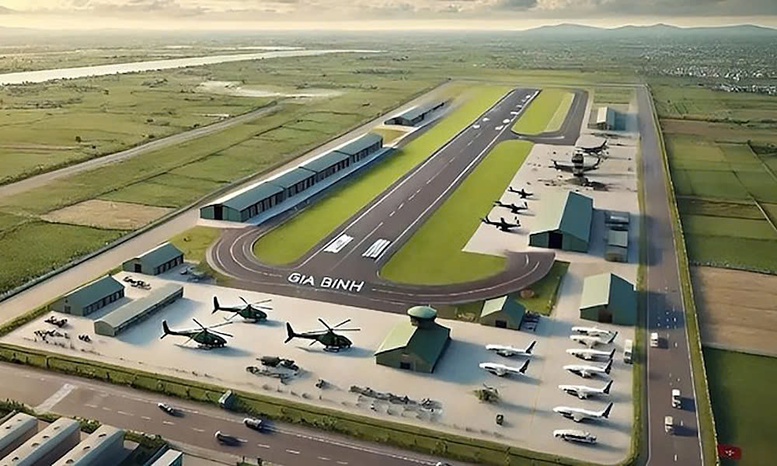
The airport is designed to fulfill a dual-function as part of Vietnam’s defense and security infrastructure while catering to civil aviation needs. Designed as a multifunctional, 4E class airport, it will provide facilities for both military operations and civilian passenger and cargo transport.
Gia Binh International Airport will cater to official flights for Party and State leaders as well as international dignitaries, striking a balance between logistic capabilities and national security requirements.
Prime Minister Pham Minh Chinh has underscored the urgency and significance of the project, urging for its rapid development adhering to the highest quality standards. He has labeled it a national key project crucial to Vietnam’s defense and security framework.
Looking ahead, the Ministry of Transport has ambitious plans for Vietnam’s air travel infrastructure. By 2030, the nation is expected to have a total of 31 airports, including 15 international and 16 domestic ones, with projections suggesting this number may rise to 34 by 2050, consisting of 19 domestic airports. This ongoing investment in infrastructure represents a commitment to bolstering Vietnam’s connectivity both regionally and internationally.