
Ho Chi Minh City: A Hub of Foreign Direct Investment in Southern Vietnam
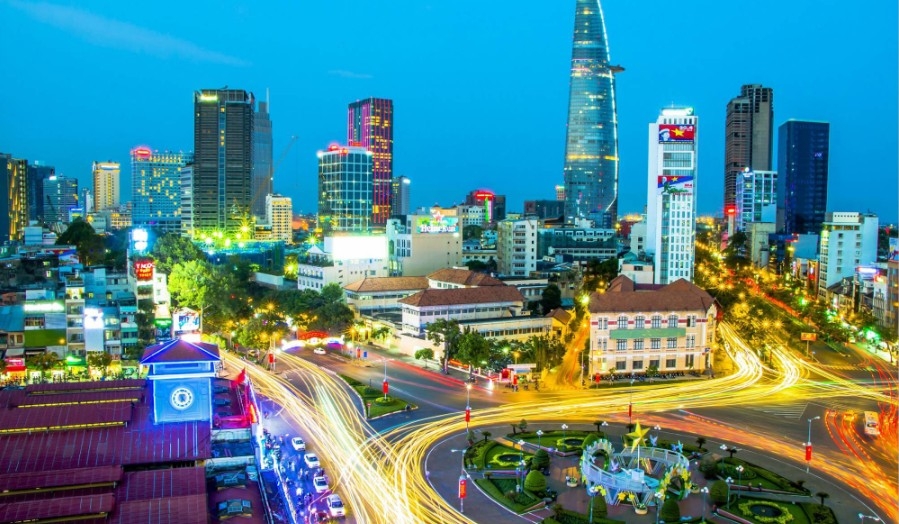
Overview of FDI Growth in Southern Vietnam
In recent months, Ho Chi Minh City has emerged as a crucial driver of Foreign Direct Investment (FDI) growth in Vietnam’s southern key economic region. Over the course of 2025, the city attracted a remarkable US$7.67 billion in FDI, marking a substantial 24.2% increase compared to the previous year. This impressive figure is particularly noteworthy given the ongoing efforts to enhance the region’s business environment through administrative mergers and expanded development opportunities.
Active Engagement with Investors
The city’s proactive approach is evident in its engagement with domestic and foreign investors. Ho Chi Minh City hosted working sessions with 55 investor delegations seeking cooperation and partnership opportunities. Major multinational corporations have recognized the city’s potential. For instance, Techtronic Industries is ramping up production plans at its Milwaukee plant located in the Hi-Tech Park, while AEON plans to invest in three new large shopping malls, signaling confidence in the region’s future.
A Surge in High-Tech Investments
In the high-tech sector, notable developments include proposals from Smart Tech Group for a battery energy storage plant with investment estimations ranging from US$340 million to US$850 million. Additionally, high-profile data center projects have attracted interest from companies such as Eaton, Evolution (a Warburg Pincus portfolio company), and Hyosung, underscoring the city’s appeal for technology-driven investments.
Growth in Dong Nai and Tay Ninh
Not just Ho Chi Minh City, but neighboring provinces like Dong Nai and Tay Ninh have also seen significant FDI growth. Dong Nai reported a total foreign investment of US$2.95 billion in the last 11 months, with industrial parks alone boasting US$2.5 billion of that investment. The province has successfully exceeded its annual FDI targets by 32%, reflecting a vibrant investment climate. Notably, developments such as Aeon Mall Bien Hoa, with over VND6 trillion in investment, are testament to Dong Nai’s attractiveness.
In contrast, Tay Ninh has issued licenses for 163 new projects and approved adjustments for 151 others, resulting in a total newly registered and adjusted investment of US$589.4 million. This amount is an increase of US$111.9 million from the previous year, thanks to the province’s selective investment promotion strategies emphasizing high-tech and environmentally sustainable projects.
Infrastructure Developments Enhance FDI Outlook
The region’s FDI outlook is poised for further strengthening, fueled by major infrastructure projects. The Long Thanh International Airport recently welcomed its first flight and is set to begin full-scale operations in the first half of 2026. This new airport is expected to significantly enhance global connectivity, reduce logistics costs, and improve export-import capabilities, making both Dong Nai and its neighboring areas more attractive to multinational manufacturers.
Ho Chi Minh City’s Ring Road 3, which spans 76.3 kilometers, is also on track to open its first phase in June 2026. This road will link various industrial parks and seaports across Ho Chi Minh City, Dong Nai, and Tay Ninh, facilitating smoother transportation routes. Furthermore, the Ben Luc–Long Thanh Expressway is projected to be completed by September 2026, improving access from the Mekong Delta to the Cai Mep–Thi Vai port complex.
Free Trade Zones: New Investment Hubs
In addition to transport improvements, upcoming free trade zone projects in Cai Mep Ha (Ho Chi Minh City) and Dong Nai are anticipated to attract strategic FDI. Dong Nai is currently drafting a proposal to establish a free trade zone that will incorporate streamlined investment procedures and a one-stop-shop model aimed at enhancing the business climate. Such initiatives will enhance the region’s appeal to both domestic and foreign investors.
Future Prospects for the Southern Key Economic Region
With the pipeline of strategic infrastructure projects nearing completion, inter-regional connectivity within Vietnam’s southern key economic region is rapidly improving. Beyond providing essential physical infrastructure, these developments are expanding the available space for future growth, enhancing regional competitiveness, and positioning the area to attract higher-quality FDI in upcoming years. The trajectory of FDI in Ho Chi Minh City and its surrounding provinces undoubtedly paints an optimistic picture for investors looking to tap into Vietnam’s burgeoning market potential.