
Regional minimum wages will be raised by 7.2% starting January 1, 2026, equivalent to an increase of 250,000–350,000 VND per month depending on the region, directly affecting the labour market and tens of millions of wage earners.
The forthcoming policy, set for implementation in early 2026, has been released with a clear roadmap, aiming to create favorable conditions for enterprises to plan their operations effectively. This initiative also serves to instill greater confidence among workers regarding their income prospects, fostering a more optimistic outlook on their financial futures.
As inflation rises and living expenses continue to challenge household budgets, it becomes increasingly vital to adopt social welfare policies, alongside training and support for enterprises. A close alignment between wages, productivity, and social welfare is necessary for wage increases to serve as a sustainable foundation for economic development.
Seeking a Stable Foundation
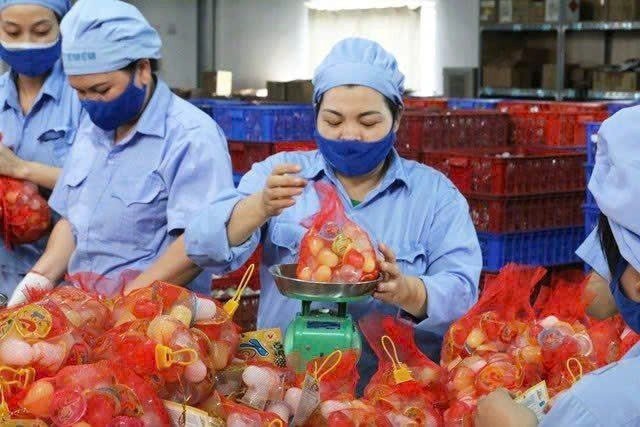
Nguyen Thi Xuan, a worker at Vietfoods Factory located in Hapro Industrial Park in Hanoi, shares her story of economic struggle. With her monthly earnings around 8 million VND, she finds it barely sufficient to cover the essential expenses of her family. As living costs—especially food and other necessities—continue to rise, many workers like Xuan feel direct pressure to maintain a quality of life. Although the minimum wage increase scheduled for January 2026 offers a glimmer of hope, the gap between wage growth and inflation weighs heavily on their everyday lives. For employees engaged in direct production, this wage hike might ease financial burdens and allow for modest savings, although doubts linger about long-term stability.
Xuan’s experience is emblematic of the broader challenges faced by numerous workers within industrial zones, where income largely depends on fixed wages. It’s crucial that wage policies are responsive to real market conditions to secure a basic living standard for everyone involved.
Le Hau Phuong, Director of Viet Nam Food Joint Stock Company, addresses the impending adjustments, pointing out significant cost pressures that small and medium enterprises may face. As wages and corresponding social insurance contributions rise in tandem, firms must carefully assess their competitive strategies. Phuong argues that wage increases, linked to economic growth and enhanced living standards, require a balanced approach that allows both workers and enterprises to thrive. He emphasizes the importance of fostering productivity through technological enhancements and skill development for employees, suggesting that open communication between employers and employees is vital for effective wage adjustments.
Stabilizing the Labour Market and Long-Term Social Welfare
Deputy Minister of Home Affairs, Nguyen Manh Khuong, highlights the significance of Decree No. 293/2025/ND-CP, which establishes the minimum wage for employees under labor contracts. This timely release of policy allows businesses to develop strategies and adjust financial forecasts ahead of the upcoming year. Khuong notes that minimum wages act as a safety net for vulnerable workers, ensuring they can sustain basic living standards amidst inflationary pressures.
The projected 7.2% wage increase reflects a thorough evaluation of the socio-economic landscape and aims to harmonize the interests of both workers and businesses. It is designed to be slightly above the projected minimum living standard through 2026, incorporating forecasted changes in consumer prices to give workers an immediate benefit.
The Ministry of Home Affairs encourages all stakeholders—management agencies, companies, and employees—to fulfill their roles during this implementation phase. Agencies are urged to facilitate guidance and support, while companies should reassess wage structures to align with the impending changes. Workers must also be proactive about understanding their rights and responsibilities, helping to foster a cooperative work environment.
Ngo Duy Hieu, Vice President of the Viet Nam General Confederation of Labour, underscores the existing income gaps in the minimum living standard and the adjusted wages. In light of global economic uncertainties, the increase is viewed as an acceptable measure. He emphasizes that trade unions remain attuned to workers’ concerns about rising living costs, advocating for continuous state-level price control and the enhancement of social welfare programs.
Hieu points out that thriving enterprises enable better financial conditions for workers. Therefore, in addition to protecting rights, trade unions are tasked with encouraging enhanced skill sets and productivity among employees, paving the way for a collaborative approach to economic growth.
Dr. Lam Van Doan, Deputy Head of the National Assembly’s Committee on Culture and Social Affairs, raises valid concerns about the negative impacts of prolonged overtime on workers’ health and overall quality of life. He argues that simply increasing income through extended working hours is not a sustainable solution. Instead, the focus should shift toward enhancing labour productivity through innovative practices and comprehensive vocational training. As productivity improves, it should naturally lead to corresponding wage increases, enabling workers to achieve a better work-life balance.
According to Dr. Doan, while regular minimum wage adjustments are essential, they should fit within the broader context of macroeconomic conditions and the operational capacity of enterprises. Historical data suggests that when wage increases are synchronized with skills development, technological advancements, and expanding social welfare, economies shift from purely quantitative growth to more qualitative, robust progress.
The plan to increase the minimum wage in 2026 raises hopes for enhanced earnings among workers. However, the effectiveness of these policies will heavily depend on a coordinated roll-out across sectors. By ensuring that wage hikes correlate with productivity, as well as implementing supportive measures for enterprises, the labour market can function more smoothly—contributing to a firmer foundation for sustained economic advancement.