
A new wave of electronics manufacturing is on the horizon, propelled by volatile energy prices and increasing demand for sustainability. Given that the electronics industry contributes around 4% of global greenhouse gas emissions, it’s essential to innovate significantly in order to lessen this environmental footprint. Fortunately, the sector is witnessing considerable advancements, with several potentially revolutionary technologies emerging. IDTechEx’s report, “Sustainable Electronics Manufacturing 2023-2033,” delves into key opportunities for sustainable innovation, concentrating on two foundational components of electronics: printed circuit boards (PCBs) and integrated circuits (ICs).
Incentives for Sustainable Electronics
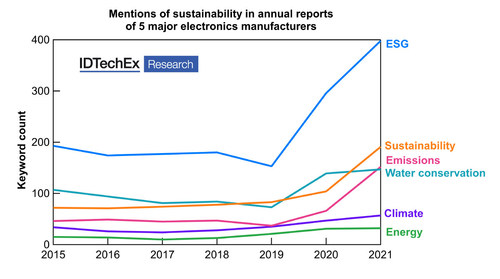
The shift towards sustainability within the semiconductor and electronics industries is being spurred by government mandates and green investment initiatives. As consumers become more conscientious, they increasingly prefer to purchase from companies that prioritize sustainable practices, and even seek employment with such organizations. This change in consumer behavior has made sustainability not just a moral imperative but also a competitive advantage.
While environmentalism is sometimes viewed as a hurdle laden with legislative complexities and burdensome disclosures, companies that embrace sustainability often find long-term financial benefits. By implementing low-emission manufacturing processes and adopting recycling schemes, businesses can significantly cut down costs linked to energy consumption and waste treatment. Moreover, prioritizing environmentally friendly practices positions companies ahead of increasingly stringent regulations, facilitating access to designated Environmental, Social, and Governance (ESG) investments.
As global energy prices continue to rise, methods that employ low-temperature and rapid processing become increasingly attractive. Some of these innovative techniques utilize additive approaches, which minimize waste by applying materials precisely where needed. This contrasts sharply with traditional subtractive manufacturing methods that generate excess materials and require substantial etching. For instance, shifting to additive methods in PCB manufacturing can reduce water consumption by up to 95%, potentially saving the industry millions of liters annually.
IDTechEx’s research highlights the importance of additive manufacturing in scaling flexible printed circuit boards. Flexible PCBs are fundamental in the evolving electronics landscape, enabling more diverse applications compared to traditional rigid electronics. The adoption of flexible PCBs often requires a rethinking of traditional processing methods—favoring plastics or paper over conventional fiber-reinforced substrates. By embracing this new technology, manufacturers can explore further innovations, such as the transition to novel materials and low-temperature processing techniques, which are vital for plastics like polyethylene terephthalate (PET) with lower heat tolerances.
Digitization for Smart Manufacturing
The realm of sustainable electronics manufacturing presents a wealth of opportunities for enhancing efficiency, minimizing waste, and improving cost-effectiveness. The integration of artificial intelligence and the Internet of Things into manufacturing processes can significantly contribute to sustainability. Smart digitized manufacturing methods enable the automation of processes while employing sensor technology to detect leaks or instances of improper material usage, thus curbing waste and helping businesses trim excess costs.
Digital data analysis further facilitates the elimination of unnecessary steps in production, enabling companies to hone in on areas for improvement in material and energy consumption. The trend towards digitization is gaining traction, with many prominent brands adopting innovative measures. Notably, at the end of 2021, Apple joined Sustainable Semiconductor Technologies and Systems (SSTS), a program initiated by the Belgian research institute, imec. This initiative aims to mitigate the environmental impact of semiconductor manufacturing through digital solutions that model more efficient production methods. Other tech giants such as Microsoft and Amazon are also participating in these groundbreaking efforts.
Outlook
Reducing the carbon footprint of the electronics industry is undeniably challenging, especially for established manufacturers hesitant to shift from traditional practices. Global government regulations and consumer demands are increasingly pressuring manufacturers to take accountability for their emissions. According to IDTechEx, adopting sustainable manufacturing methodologies not only provides financial benefits but also showcases a commitment to reducing environmental impacts. Their comprehensive analysis of innovative sustainable technologies in the electronics sector can be explored in their report, “Sustainable Electronics Manufacturing 2023-2033.”
This report investigates the various innovations poised to make electronics manufacturing more sustainable while evaluating their implementation in real-world scenarios. It reviews the latest developments in technology performance, supply chain dynamics, and manufacturing methodologies, identifying key challenges and opportunities for innovation in the sustainable electronics arena. With 20 years of experience in covering emerging technologies—including printed and flexible electronics—IDTechEx offers invaluable insights gleaned from industry experts, conferences, and consulting projects.
For further details on the IDTechEx report “Sustainable Electronics Manufacturing 2023-2033” and to access downloadable sample pages, please visit www.IDTechEx.com/SustainableElectronics.
Source: IDTechEx