
The Rising Influence of Taiwan in Vietnam’s Textile Industry
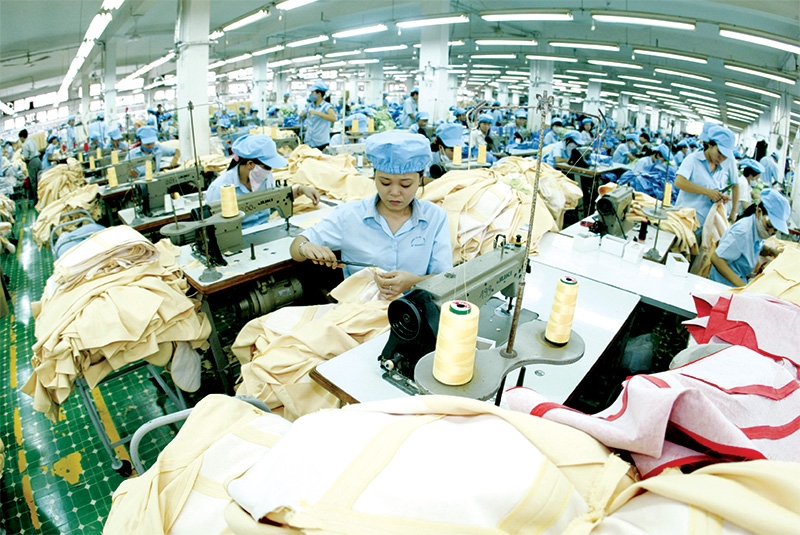
Vietnam’s garment and textile sector has attracted investments from around 16 countries and territories, with South Korea and Taiwan leading the charge. This influx of foreign investment highlights Vietnam’s growing significance as a manufacturing hub, particularly for the apparel industry.
Taiwan’s Strategic Investments
One notable investor is Far Eastern New Century, a Taiwan-based apparel conglomerate established in 1942. The company recently articulated its strategy for expanding its manufacturing base in Vietnam, citing the benefits of affordable, high-quality labor and the potential advantages arising from free trade agreements (FTAs). During its 2019 Annual General Meeting, Far Eastern New Century announced plans to boost its investment in Vietnam from $300 million to an impressive $760 million.
This expansion positions Far Eastern New Century to benefit significantly from Vietnam’s membership in the ASEAN Free Trade Area and the Comprehensive and Progressive Agreement for Trans-Pacific Partnership (CPTPP). With ongoing growth in the middle class across ASEAN economies, the demand for high-quality textiles is expected to soar.
State-of-the-Art Manufacturing Facilities
Far Eastern New Century has made considerable strides in Vietnam, constructing a vertically-integrated production site that includes a PET production line capable of generating 400,000 tonnes annually. Also in the pipeline are expansions to both polyester filament and staple fiber plants. The company anticipates that these upgrades will catapult it into the ranks of the top three PET producers worldwide. PET, or polyethylene terephthalate, is crucial not only in textiles but also for food and liquid containers.
Economic Impact and Export Growth
In 2018, Vietnam’s garment and textile exports hit $36.2 billion, making it the fourth largest export sector in the country. Projections suggest that this figure will climb to $50 billion by 2025. Key export markets included Japan and Canada, with values of $398.2 million and nearly $70 million, respectively. Similarly, the footwear and handbag industry showcased robust growth, contributing $19.5 billion to exports that year and asserting Vietnam’s place as the second-largest footwear exporter globally.
With these figures in mind, Wang Wen-yuan, chairman of the Chinese National Federation of Industries, emphasized that Vietnam remains a crucial investment destination for Taiwan. Taiwanese investors are particularly eager to capitalize on the opportunities presented by Vietnam’s evolving textiles landscape.
Competitive Advantages Through Free Trade Agreements
Taiwanese companies like Pou Chen have established several subsidiaries in Vietnam, projecting an annual export revenue of $1.5 billion. By consolidating production in Vietnam, these companies gain a competitive edge, avoiding the trappings of tariffs imposed on Chinese goods. In the first quarter of 2023, Vietnam accounted for 46% of Pou Chen’s total output, underscoring its significance in global supply chains.
The CPTPP is also a boon for Vietnamese footwear exports, where 78% enjoy zero tariffs or substantial reductions, enabling firms to penetrate markets more effectively.
Navigating Challenges and Rising to Opportunities
While the opportunities are vast, new trade agreements bring strict requirements regarding product origin, which may present challenges for businesses reliant on imported materials from countries like China and India. Approximately 2,000 foreign companies have invested around $15.75 billion in Vietnam’s garment and textile sector, with South Korea leading the way.
Zhan Zhengtian, president of the Taiwan Textile Federation, highlighted the potential for Taiwan to support Vietnam in advanced weaving and dyeing technologies, along with personnel training in fashion design. As Vietnam’s garment and textile sector consists of about 4,000 companies—650 of which are foreign-invested—it remains crucial for Taiwan to adapt and invest wisely.
Advancing through Innovation
Far Eastern New Century is pushing the envelope by incorporating the latest technologies to enhance Vietnam’s manufacturing capabilities. The company is focusing on establishing a smart manufacturing supply chain, integrating processes from upstream petrochemicals to downstream textiles. Employing 3D simulations for training and maintenance, the goal is to reduce workplace injuries and improve efficiency.
The group is also utilizing an intelligent power management system to track electricity consumption, enabling better resource management and cost savings. The move towards Industry 4.0 is reflected in the implementation of automatic guided vehicles in production processes, signifying a shift toward more innovative, technology-driven manufacturing.
Conclusion
Taiwan’s investments in Vietnam signify not only a boost for the local economy but also a transition towards high-value, innovative production in the textile sector. As various players continue to explore this vibrant market, Vietnam’s role as a manufacturing powerhouse in Southeast Asia is set to strengthen, paving the way for new opportunities and challenges alike.