
Vietnam’s Industrial Real Estate Boom
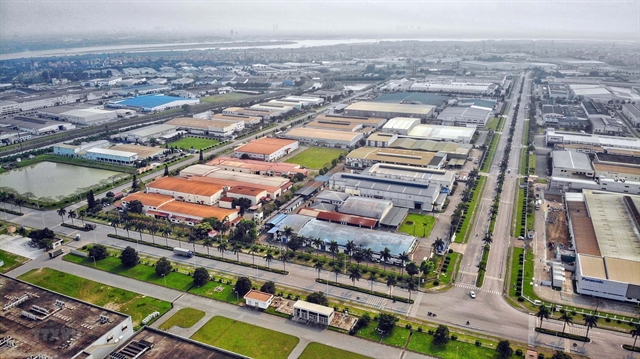
The positive growth prospect of the Vietnamese economy after the pandemic attracted investors, fostering a robust industrial real estate market in the initial months of the year. — VNA/VNS Photo
Vietnam’s industrial real estate market has been bustling since the beginning of 2023, driven by a remarkable post-pandemic recovery. With an optimistic economic outlook, both foreign and domestic investors are seizing opportunities to establish large-scale industrial zones.
Rising Industrial Zones
One of the significant developments is the commencement of the VSIP 3 Industrial Zone project in Bình Dương Province. Spanning over 1,000 hectares, this initiative, launched by VSIP Group, aims to attract manufacturers looking to ramp up production. Over 30 companies have already shown interest, collectively eyeing an impressive investment of around $1.8 billion.
Major Investments in Pharmaceuticals
In a noteworthy collaboration, the Đại An Urban – Industrial Zone Development Corporation signed a partnership with Indian investors to develop a 960-hectare pharmaceutical park in Hải Dương Province. This ambitious project, expected to be valued between $10-12 billion, is designed to become a hub for leading global pharmaceutical firms focusing on research and production.
Urban-Industry Complex Developments
Another significant partnership involves Saigon Telecom Technology Joint Stock Company (Saigontel) and VinaCapital, who have inked a deal with Singapore-based Aurous. This collaboration aims to invest around $2.5 billion into a 700-hectare urban-industry complex in Bắc Giang. Such endeavors signal a shift towards integrating urban living with industrial operations, creating multifunctional spaces that cater to both business and lifestyle needs.
Strong Demand for Industrial Land
According to SSI Research, the demand for industrial land is projected to surge due to a strategic production shift toward Vietnam, amplified by ongoing infrastructure projects. Initiatives like the Biên Hòa – Vũng Tàu and North-South expressways, as well as significant port developments, are expected to improve accessibility and appeal to a broader range of manufacturers.
Rising Rental Prices
As the demand escalates, industrial land rents in Vietnam are anticipated to rise. SSI Research predicts increases of 8-9 percent in the Southern region and 6-8 percent in the North. This trend highlights the growing scarcity of available land, coupled with an influx of businesses eager to establish operations in a burgeoning market.
Factors Attracting Multinational Corporations
Sử Ngọc Khương, a senior director at Savills Vietnam, emphasized that the positive growth potential of the Vietnamese economy presents an inviting environment for investors. However, to fully capitalize on this momentum, the country must develop extensive transportation and logistics infrastructure. Administrative reforms are crucial to enhance the investment climate and simplify processes for foreign investors.
Human Resource Development
An essential aspect of this industrial boom is the need for a well-equipped workforce. Localities and Vietnamese firms must focus on developing high-quality human resources, especially in hi-tech fields. The government is prioritizing investments in industries that require skilled labor, moving away from traditional, labor-intensive projects.
Eco-Industrial Parks for Sustainable Growth
David Jackson, CEO of Colliers Vietnam, pointed out the need for a paradigm shift in industrial park development. Establishing eco-industrial parks can foster sustainable growth by minimizing resource exploitation and environmental impact while enhancing business performance. This approach aligns with global efforts to combat climate change and demonstrates Vietnam’s commitment to progressive industrial practices.
Enhancing Production and Logistics Connections
To boost competitiveness in the global market, industrial zones need to foster strong linkages that develop production and logistics chains. By streamlining these connections, businesses can reduce production costs and enhance sustainability, not only bolstering their own operations but also contributing to the nation’s economic resilience.
In summary, Vietnam’s industrial real estate landscape is rapidly evolving, characterized by significant investments, strategic infrastructure developments, and a shift toward sustainability. This dynamic environment offers promising opportunities for both local and international players in the manufacturing sector.