
A Magnet for Next-Generation Investment
As global tax policies undergo significant transformations and trade tensions increase, businesses worldwide are reevaluating their investment strategies. Concurrently, an increasing number of countries, including Vietnam, are making robust commitments to achieve net-zero emissions. Recent initiatives like the EU’s Carbon Border Adjustment Mechanism (CBAM) and the establishment of global Environmental, Social, and Governance (ESG) standards are raising the bar for transparency regarding emissions, clean energy utilization, and the development of green infrastructure.
Industry experts suggest that this is a pivotal moment for Vietnam to adopt innovative development approaches, such as eco-industrial parks (EIPs), aimed at attracting high-quality foreign direct investment (FDI). Truong Khac Nguyen Minh, Deputy General Director of Prodezi Long An, observes that today’s investors are concerned not just with cost or location but are increasingly focused on emission targets, availability of clean raw materials, and adherence to ESG compliance. These factors are instrumental in shaping a new, sustainable manufacturing ecosystem at Prodezi.
 |
|
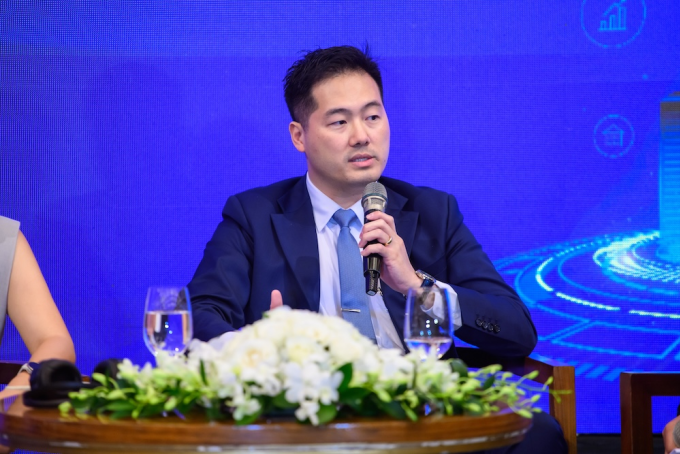
Truong Khac Nguyen Minh, Deputy General Director of Prodezi Long An Corporation. Photo courtesy of Prodezi Long An |
“We’ve built our EIP model around clean energy usage to reduce CO2 emissions,” Minh explains. “This includes recycling at least 25% of wastewater and achieving international green building certifications. Our goal is to preserve ecosystems while ensuring a harmonious balance between industrial zones and livable communities.”
The project enhances tenant experiences with advanced digital infrastructure, integrated logistics, one-stop administrative services, and seamless access to the adjoining LA Home eco-urban development. Minh emphasizes that these value-added features are crucial for Prodezi’s competitive edge in attracting prime FDI from Japan, South Korea, the EU, and broader ASEAN, aiding diversification of investment sources. Notably, Prodezi is particularly focused on green and high-tech sectors such as electronics, automotive, supporting industries, logistics, data centers, semiconductors, and artificial intelligence (AI).
Synergistic Development Through Industrial Symbiosis
Prodezi also champions the concept of industrial symbiosis, encouraging companies to share or repurpose materials and waste, lowering costs and enhancing efficiency. While this remains a challenge for traditional industrial zones, Prodezi has been purposely designed to facilitate resource sharing. Key features include recycling water systems, waste-sorting infrastructure, and collaborative solar energy initiatives with Japanese partners.
 |
|
Prodezi IP is located next to LA Home eco-urban area. Photo courtesy of Prodezi Long An |
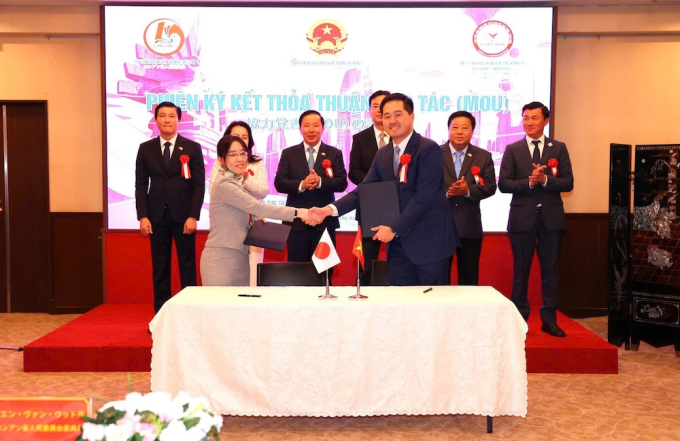
“Our partnerships with companies like Toho Gas, Chitose, and TA Vital are paving the way for our initial industrial symbiotic networks, encompassing energy, wastewater, and organic fertilizer,” Minh says. As occupancy rates rise, Prodezi aims to amplify these symbiotic practices across clustered sectors, particularly in food packaging and by-product recycling. These initiatives significantly decrease costs and optimize resource usage, fostering circular economy practices within the park.
“Our infrastructure and comprehensive support systems are crafted to empower tenants to maximize their competitive advantages,” Minh continues. He visualizes Prodezi, alongside LA Home, evolving into a modern, sustainable ecosystem that seamlessly integrates industrial activity, urban living, and community services in the Mekong Delta, thereby driving long-term economic and social advancement.
Prodezi’s eco-industrial park goes beyond mere environmental compliance; it seeks to generate lasting economic and societal advantages. Countries such as Denmark and South Korea serve as compelling examples, demonstrating that enhancing resource efficiency and minimizing pollution can yield substantial returns and enduring value.
 |
|
The signing ceremony between Prodezi Long An and Chitose Group in Japan, March 30. Photo courtesy of Prodezi Long An |
Vietnam is also laying a robust legal groundwork for EIPs through Decree 35/2022/NĐ-CP and more recently, Resolution 68-NQ/TW. These provide a more conducive regulatory environment for eco-industrial development.
Despite these positive strides, challenges remain. By May 2024, only 1% to 2% of Vietnam’s 425 industrial parks had transitioned to EIPs, as reported by the Ministry of Industry and Trade. This reality underscores the urgent requirement for increased legal and policy support to accelerate the transition.
Minh strongly advocates for the establishment of an Industrial Park Law to foster a comprehensive legal framework that nurtures the growth of Vietnam’s industrial landscape.
Vietnam is at a critical juncture. Embracing forward-looking models like eco-industrial parks will be essential for enhancing the country’s attractiveness to investors. The concept of EIPs has moved from being a niche idea to a necessity, pivotal for creating a competitive, sustainable, and globally integrated industrial economy. With strategic vision and proactive implementation, entities like Prodezi are solidifying their roles in defining the future trajectory of industrial development in Vietnam.
Prodezi Industrial Park spans 400 hectares and is strategically located at the intersection of Provincial Road 830 and Luong Hoa–Binh Chanh Boulevard in Ben Luc District, Long An. It offers sustainable industrial land, ready-built warehouses, and modern factory solutions. Its location provides crucial access to key highways, including the HCMC–Trung Luong Expressway, Ben Luc–Long Thanh Expressway, and Ring Roads 3 and 4. Planned infrastructure upgrades for 2025-2026 are expected to significantly reduce travel times to central Ho Chi Minh City, Long Thanh Airport, and major seaports like Cat Lai and Cai Mep.
Situated at the gateway between Ho Chi Minh City and the Mekong Delta, Prodezi Industrial Park is optimally positioned as a high-potential investment destination, particularly as neighboring provinces like Tay Ninh enhance their trade connectivity.