|
| Effective expansion tactics illustrate retail market health |
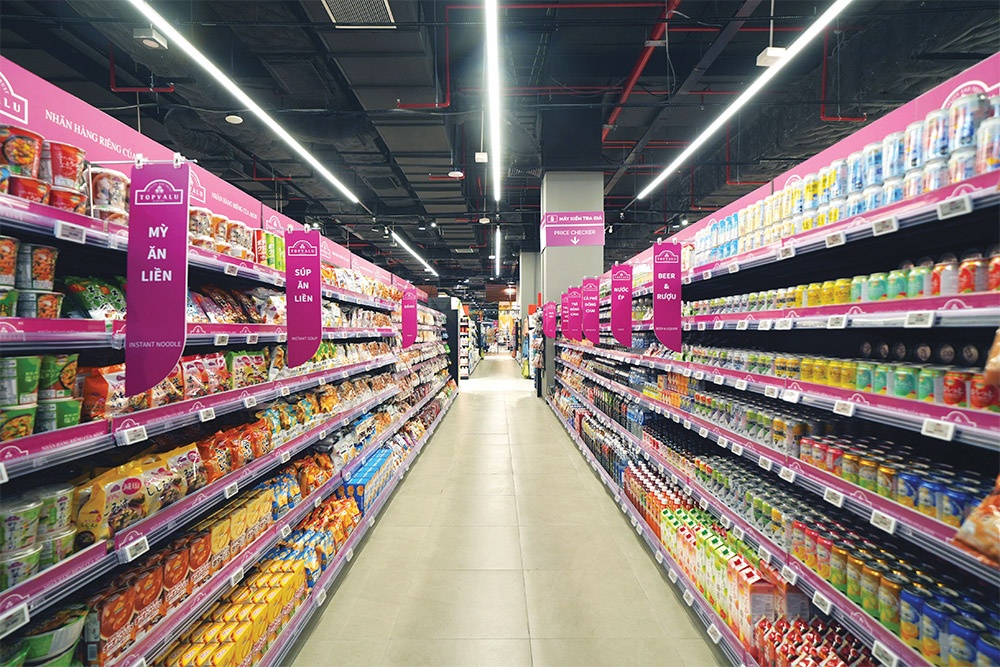
Last weekend saw a significant milestone for AEON Vietnam with the opening of its ninth department store in Hanoi. This move is pivotal in the company’s strategy to broaden its presence in the Vietnamese retail landscape. Furusawa Yasuyuki, the general director of AEON Vietnam, expressed the company’s commitment not just to expanding large shopping malls, but also to creating diverse retail formats in close proximity to residential areas. The AEON Xuan Thuy store exemplifies this approach, catering to the evolving shopping needs of local communities.
Following the disruptions caused by the pandemic, AEON Vietnam has reported a stable growth trajectory, attributed to its innovative strategies. Looking ahead to 2024, the retailer is poised to intensify its expansion with plans for new department stores, supermarkets, and specialty stores. Yasuyuki revealed that AEON’s strategy revolves around prolific openings, local product development, e-commerce enhancement, and the nurturing of local managerial talent.
A notable highlight in AEON’s plans is the anticipated launch of the Tan An shopping mall in the Mekong Delta by the end of its fiscal year. This launch underscores AEON’s ambition to fortify its foothold across various regions of Vietnam, with the goal of establishing 3-4 new supermarkets in both northern and southern territories in 2025, while also rolling out smaller formats and specialty stores nationwide.
Market analysis indicates that Vietnam’s retail landscape is thriving. According to Tien Phong Securities, the retail market size is projected to exceed $276 billion in 2024 and could swell to $488 billion by 2029, reflecting an average growth rate of approximately 12%. This upward trend has spurred a competitive push among retailers to enhance their market share by optimizing the customer experience through innovative store formats and strategic location selections.
WinCommerce, another key player in the Vietnamese retail sector, has made significant strides, having opened 44 additional WinMart+ and Win stores in November alone. This expansion has increased their total number of stores to nearly 4,000 across the nation. The hybrid model employed by WinCommerce, with Win stores in urban settings and WinMart+ in rural areas, exemplifies their strategy to capture varied customer segments.
Renovations have also played a crucial role in WinCommerce’s strategy, as several of its supermarkets in Hanoi underwent significant upgrades to enhance the shopping experience, providing modern designs and a wider array of products. With expectations of a 9% growth in physical stores by 2025, WinCommerce is effectively responding to market demands.
Concurrently, Central Retail is investing heavily—approximately $1.45 billion—into expanding its operations from 2022 to 2027. This will allow them to nearly double their store count to 600, enhancing their presence in close to 60 localities. Central Retail is not only focused on larger supermarkets but is also pioneering the Mini Go! format, which aims to cater to different market segments. Recently, they opened two new Mini Go! supermarkets, bringing their total to 14 in Vietnam.
The outlook for the retail sector remains optimistic. A January report from MB Securities highlights that modern retail is on a growth trajectory, buoyed by rising consumer incomes and an increasing demand for quality products. The integration of AI and omnichannel strategies has further empowered retailers to tap into the considerable potential of this market.
Analysts suggest that major retailers like AEON Mall and WinMart+ are faring well thanks to effective sales strategies and adaptability. WinCommerce has notably rebounded, reporting a 15% increase in average revenue as they successfully attract customers from traditional markets.
The General Statistics Office’s report for 2024 revealed that Vietnam’s retail sales of goods and services reached $266 billion, marking a 9% increase. Notably, the retail and consumer services sector constitutes about 55.5% of the national GDP, reflecting its vital role in the economy.
|
Nguyen Anh Duc, chairman Vietnam Retailers Association
The market with a scale of more than $200 billion will be a fierce competition for retailers not only in terms of price but also in terms of increasing convenience, value, emotions and shopping experiences. To not fall behind, businesses need to anticipate consumer trends, take advantage of technology and innovate to meet the increasing needs of customers. A notable trend in the market is the strong transformation in the structure of retailers. In 2024, the structure of enterprises with foreign indirect investment and foreign-invested enterprises will account for more than two-thirds of total retail sales. This strongly suggests that the Vietnamese retail market is attractive. 2024 also witnessed a transformation between the proportion of modern retail and traditional retail when, for the first time post-pandemic, the proportion of traditional retail has dropped further, which is a change in trend. Before the pandemic, the proportion of modern retail was 24 per cent, after the pandemic it decreased to 18-19 per cent. In 2025, modern retail will increase to 25 per cent. In big cities such as Hanoi and Ho Chi Minh City, the proportion of modern retail accounts for 28-30 per cent, higher than in other cities and provinces. For large retailers, e-commerce retail revenue is constantly increasing. This is consistent with the general direction of digital development. Retailers have made appropriate transformations and expect to increase revenue from this in the future. Nguyen Cao Ngoc Dung, director of Retail Research NielsenIQ Vietnam
The purchasing power of Vietnamese consumers in 2024 has recovered, although not as expected by manufacturers and retailers, but will be more positive in 2025. Nielsen’s research shows that fast-moving consumer goods in the Asia-Pacific region have grown in sales, output and price with growth rates of 1.9 per cent, 1.8 per cent and 0.1 per cent respectively compared to the same period last year. This is the result of the efforts of manufacturers and retailers in diversifying products and implementing many stimulus programmes to support consumers. The increase in the percentage of people who think the financial situation is better is an indication that the situation will be more positive going forward. Our latest survey also found that 30 per cent of consumers said their financial situation was better, up 2 per cent in comparison with the beginning of the year, and 32 per cent said it was worse, down 2 per cent. The top three concerns of consumers today are rising food prices. 33 per cent of consumers said they were spending more on essential food. They are also worried about higher utility costs such as electricity, water, and education. The third concern is the difficulty caused by the general economic situation. We believe that consumers will be more alert and conscious about balancing their spending. They will maintain spending on healthcare, long-term financial investments, and home entertainment. They are also willing to spend more on healthy food and mental health. However, they will cut budgets on eating out, entertainment, and fashion. |



 |
Retail and services expected to maintain robust trajectory
With positive signals in retail and services, continued robust growth in retail sales of goods and consumer service revenues is forecast. |