
Thai Binh Economic Zone: A Catalyst for Growth
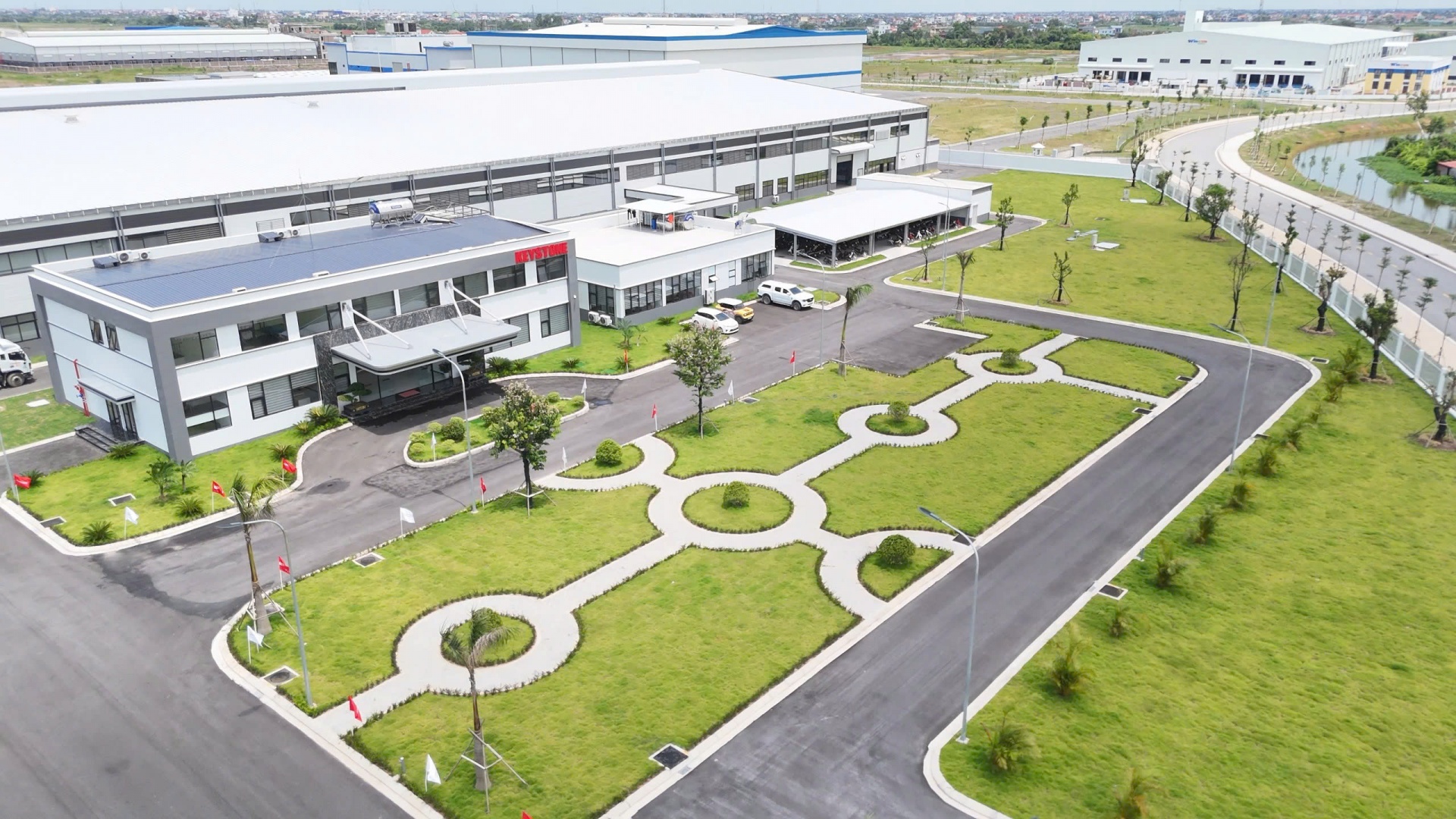
Established in 2017, the Thai Binh Economic Zone (EZ) spans over 30,500 hectares, making it the largest coastal economic zone in the Red River Delta. With its well-developed infrastructure and a diverse industrial ecosystem, the Thai Binh EZ has become a beacon for investment, significantly supporting employment and the wider socioeconomic landscape of the region.
Geographic Advantage
Strategically positioned in the economic triangle formed by Hanoi, Haiphong, and Quang Ninh, Thai Binh EZ enjoys a prime location with proximity to critical international trade routes. This advantageous geography sets it apart from other coastal economic zones in Vietnam. Transitioning from an agriculture-centric locality, the former Thai Binh province has leveraged this site to usher in a new era of industrialization and modernization.
Investment Magnet
Over the years, Thai Binh EZ has morphed into a major hub for both domestic and foreign investment. Between 2021 and mid-2025, it attracted an impressive $5 billion in registered capital, representing a staggering 71% of the total investment within Thai Binh province. Notably, $4.3 billion of this investment came from international backers, underscoring the province’s appeal as one of Vietnam’s leading destinations for foreign capital. By 2023, it ranked fifth nationwide and climbed to twelfth position in 2024’s investment landscape.
Major Industrial Parks
The development of four major industrial parks (IPs) within the EZ—Lien Ha Thai, Hai Long, Vietnam-Singapore Industrial Park, and Hung Phu—has attracted nearly VND 13 trillion (or about $492 million) in infrastructure investment. Among these, Lien Ha Thai stands out as the first IP within the economic zone. It has successfully secured 51 secondary projects valued at nearly $1.6 billion, marking its transformative potential for the region.
Upcoming Projects
Several significant projects are on the horizon, promising to further enhance the EZ’s profile. Notable developments include:
- A $2 billion liquefied natural gas (LNG) power plant with a capacity of 1,500 MW.
- GEL O&J’s $319 million vehicle assembly plant.
- Compal’s $260 million electronics facility.
- Greenworks’ $200 million gardening equipment factory.
- Pegavision’s $200 million contact lens manufacturing plant.
- Lotes’ $170 million electronic components factory.
- A $100 million soju liquor plant.
These projects reflect the zone’s commitment to diversifying its industrial base and maximizing economic potential.
Industrial Performance
The economic indicators from the first half of 2025 paint a promising picture. Enterprises in the EZ and its associated industrial parks reported nearly VND 41 trillion (approximately $1.55 billion) in industrial output, marking a more than 21% increase year-on-year. Exports surged to $1.26 billion, an almost 22% jump, while budget contributions exceeded VND 1.5 trillion (over $56.8 million), a growth of 10%. Notably, these parks have generated stable employment for approximately 79,000 workers, with 96% of them entitled to social insurance.
Infrastructure Development
Following its merger with Thai Binh, Hung Yen Province has made significant strides in infrastructure improvements. A key project is the 34 km coastal road that is expected to be fully operational by the end of the year, linking vital coastal provinces from Quang Ninh to Thanh Hoa. Other major transport initiatives, such as the CT.08 Thai Binh – Nam Dinh Expressway and a roadway connecting Thai Binh city to Can Vanh, are also in progress, enhancing both logistics and seaport services.
Energy Infrastructure
Energy infrastructure is another cornerstone of the Thai Binh EZ’s development strategy. The province has successfully commissioned two thermal power plants with a capacity totaling 1,800 MW. Additionally, construction of the 1,500 MW LNG power plant is set to begin before October, positioning the region as a key energy hub in northern Vietnam. Investments in transformer stations and power grids ensure robust supply for burgeoning industrial projects.
Social Infrastructure and Urban Development
The focus of Thai Binh EZ isn’t limited to industrial and energy development; there is also a keen interest in social infrastructure enhancements. Housing for workers, social housing initiatives, and the establishment of new urban areas are in various stages of approval and implementation. At Lien Ha Thai IP alone, six worker dormitory projects are in place, providing accommodations for around 6,000 people. Moreover, tourism and service projects like the Con Vanh Golf Course and Saphia Hotel are reshaping the province’s urban landscape.
The Future Vision
Looking ahead, Thai Binh EZ aspires to transition from a coastal hub to a fully-functional free economic zone, integrated regionally and globally. This ambitious transformation is anchored in four fundamental pillars: freedom of business, capital flow, talent, and governance. A comprehensive strategy is evolving, poised to attract visionary investors and cement Hung Yen’s status as both a “new investment destination” and a “sustainable destination” on Vietnam’s industrial map.