
Vietnam’s Economic Acceleration: A Blueprint for Growth 2025
Prime Minister Pham Minh Chinh has firmly established a roadmap for Vietnam’s economic trajectory, emphasizing significant growth objectives for 2025. His directives to ministries, agencies, and local authorities focus on implementing three strategic breakthroughs, six key tasks, and 12 primary solutions aimed at achieving double-digit growth. This strategic framework sets the stage for the 2026-2030 socio-economic development plan.
Groundwork for Growth
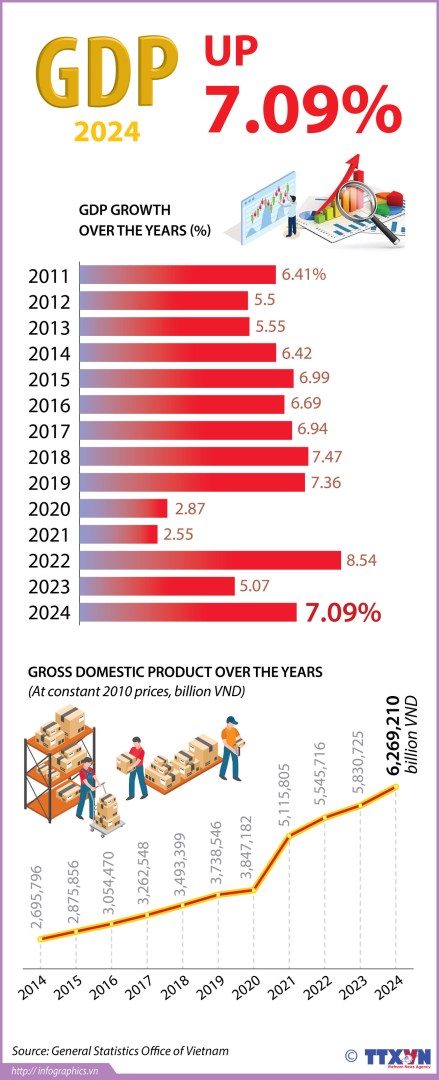
2024 stands as a pivotal year for Vietnam’s economic landscape, marked by crucial foundations and achievements. Despite global economic volatility and the disruptions caused by Super Typhoon Yagi, Vietnam has demonstrated its resilience, recording a GDP growth rate exceeding 7%. This remarkable performance places Vietnam among the few nations globally with high growth rates.
International Recognition
International economic organizations are recognizing Vietnam’s performance, often revising their growth forecasts upward. Noteworthy revisions include Standard Chartered’s increase to 6.8%, VinaCapital maintaining predictions at 6.5%, and HSBC adjusting its growth forecast to 7%. The International Monetary Fund (IMF) echoes these sentiments with a revamped projection of 6.8%. Furthermore, Vietnam’s national brand value has surged to 507 billion USD, highlighting its increasing global standing.

Trade and Inflation Management
Vietnam’s foreign trade has emerged as a vital stimulus for economic growth, with total import-export turnover reaching nearly 800 billion USD—a 15% increase from the previous year. Remarkably, this figure nearly tripled the assigned target.
The country also maintained its inflation rate below 4%, a significant achievement in the face of wage hikes and price adjustments for various goods and services.
Economic Surplus
For the ninth consecutive year, Vietnam enjoyed a trade surplus of approximately 25 billion USD, bolstering foreign exchange reserves and contributing to the macroeconomic stability that enhances investor confidence.

Fiscal and Monetary Policy Essentials
Fiscal and monetary policies have played instrumental roles in fortifying economic performance. The government has enacted extensive tax reductions, creating a conducive environment for businesses and fostering job creation. The Ministry of Finance has facilitated initiatives amounting to 191 trillion VND (approximately 7.5 billion USD) to support enterprises and citizens.
Furthermore, Vietnam’s banking sector has seen a decline in lending rates by nearly 0.96% since late 2023, allowing for improved access to credit. This strategic environment has catalyzed production recovery and sustainable economic growth.

Embracing New Models
Vietnam is prioritizing the development of innovative economic models and sectors. As highlighted by Minister of Planning and Investment Nguyen Chi Dung, there’s a clear focus on leveraging growth poles, economic corridors, and dynamic zones to engender nationwide spillover effects. The inclusion of comprehensive agreements, such as the Vietnam-UAE Comprehensive Economic Partnership (CEPA), underscores the nation’s commitment to deeper global integration.

Infrastructure Investment
Investment in infrastructure remains vital for sustaining economic momentum. The construction and enhancement of critical transportation networks, such as the Cần Thơ Bridge, facilitate access and trade across regions, bolstering socio-economic development.

Conclusion
As Vietnam strides towards its ambitious growth targets, the landscape promises innovation, resilience, and prosperity. Each initiative is strategically crafted, revealing a focused approach toward achieving sustainable economic growth while fostering a conducive environment for domestic and international stakeholders. The journey ahead looks promising, paving new avenues for Vietnam’s bright economic future.