
The Vietnamese Shipping Industry in 2025: Navigating Challenges and Opportunities
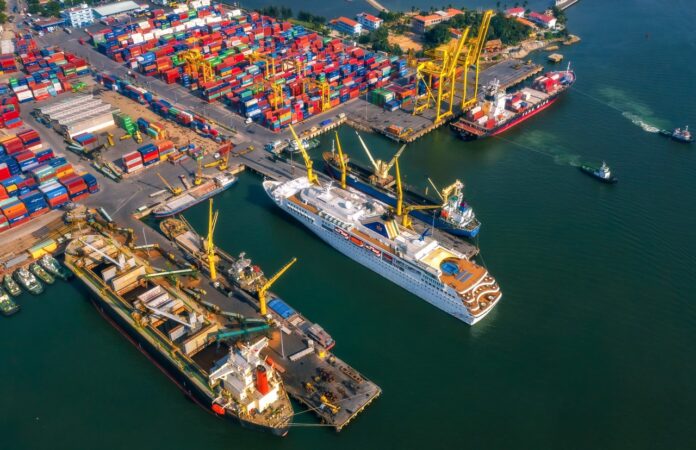
As geopolitical tensions and global trade disputes escalate, Vietnam’s shipping industry finds itself at a pivotal point in 2025. Once celebrated for its strategic location and burgeoning port infrastructure, the Southeast Asian nation faces significant challenges. These include grappling with the potential consequences of growing U.S. tariffs while seizing new prospects in a transformed global supply chain.
U.S. Tariffs Cast a Shadow
The immediate concern for Vietnam arises from suggested steep tariffs by the United States. In a bold move, the Trump administration has proposed a hefty 46% duty on Vietnamese exports to the U.S. This decision is part of a broader strategy aimed at curbing Vietnam’s ballooning trade surplus with the United States, which witnessed a remarkable 25% surge in the first four months of 2025 compared to the same period last year.
The economic aftermath of these tariffs could be profound. Moody’s Analytics recently revised Vietnam’s GDP growth forecast for 2025 downward from 6.5% to 5.8%, emphasizing the dampening impact of reduced U.S. demand and increased trade barriers. Particularly vulnerable is the manufacturing sector, which is central to Vietnam’s container shipping volumes.
Signs of Resilience
Amid these looming threats, Vietnam’s port system has showcased remarkable resilience. In the first quarter of 2025, Quang Ninh’s seaports recorded a 7% year-over-year increase in cargo throughput, moving upwards of 40 million tons. This impressive performance highlights the strength of Vietnam’s maritime logistics network, even as global uncertainties rise.
A comprehensive analysis from FiinRatings, which evaluated 45 companies within the sector, assigns Vietnam’s seaport industry an “intermediate” risk profile. Many port operators have been managing established facilities with predictable cash flows, displaying relatively low sensitivity to fluctuations in economic cycles. Notably, Tan Cang – Saigon dominates the industry, accounting for approximately 47% of national container throughput, followed closely by VIMC and Gemadept.
Riding the China+1 Wave
While immediate throughput may be affected by U.S. trade barriers, Vietnam stands to gain from a long-term trend: the global pivot in supply chains away from China. The “China+1” strategy has motivated multinationals to relocate manufacturing operations to Vietnam—particularly in sectors such as electronics, textiles, and light manufacturing—thereby reinforcing the country’s critical role in international trade.
Strategic Infrastructure and Reforms
Vietnam is actively investing in its future. Through its Seaport Master Plan 2021–2030 (Decision 1579/QD-TTg), the government is focused on modernizing and expanding port capacity, aiming to handle up to 47 million Twenty-foot Equivalent Units (TEUs) by 2030, with further development goals set for 2050.
Additionally, the competitive landscape among Vietnamese ports has led to measurable improvements in efficiency. A recent study published in Acta Logistica, utilizing Data Envelopment Analysis, highlights that intensified competition—especially in regions like Hai Phong and Ho Chi Minh City—has spurred enhancements in productivity and responsiveness within port operations.
Outlook: Cautious Optimism
Vietnam’s shipping sector is undoubtedly poised for near-term turbulence as tariff threats loom over its vital trade corridors. However, with a foundation built on robust infrastructure planning, favorable geopolitical positioning, an ongoing shift in supply chains, and growing operational efficiency, the country appears well-equipped to withstand external shocks.
Rather than faltering, Vietnam’s maritime industry may very well emerge stronger, redefining its role in global trade as it adapts to new challenges and embraces strategic growth opportunities.