
By My Ha, Minh Hue
Mon, March 24, 2025 | 4:26 pm GMT+7
Many sectors in Vietnam are expected to benefit significantly from the policy of allowing higher inflation to achieve an 8% economic growth this year, with real estate and retail standing out, according to economists.
Higher Inflation Beneficial for Economy
On February 5, the government issued Resolution No. 25/NQ-CP, outlining growth targets for various industries, sectors, and localities, ensuring that the national growth goal for 2025 reaches at least 8%. Prime Minister Pham Minh Chinh acknowledged the challenges but emphasized, “No matter how difficult, we must achieve it.”
Consequently, monetary policy will continue to be managed flexibly in harmony with fiscal policies (including taxes, fees, increased revenue, and cost savings) to create favorable conditions for businesses and individuals. Notably, the Prime Minister indicated that inflation might rise to stimulate economic growth.
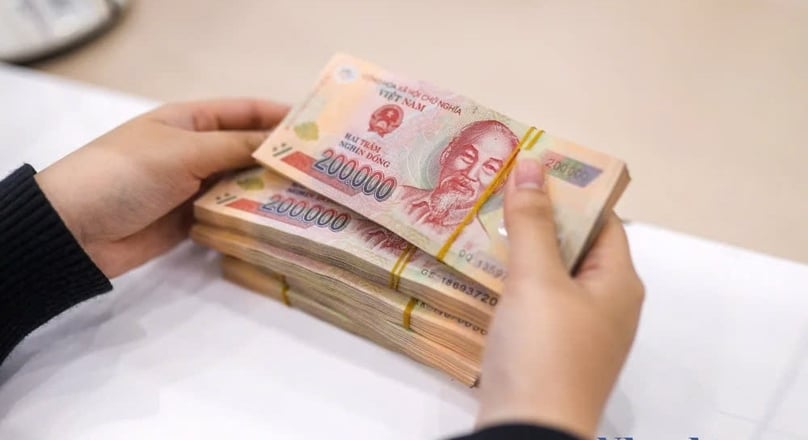
For a GDP growth rate of at least 8% this year, Vietnam’s credit must expand 16%. Photo by The Investor/My Ha.
Nguyen The Minh, director of research and development at Yuanta Securities Vietnam (YSVN), pointed out three key macroeconomic factors in policy management: interest rates, exchange rates, and inflation. It is possible to balance only two of these factors at a time, not all three.
The Vietnamese economy relies heavily on credit. To achieve an 8% GDP growth rate, credit growth needs to be at least 16%, and for double-digit growth, it must exceed 20%.
Although interest rates declined in 2024, credit growth was around 15%. Therefore, to drive higher growth, interest rates must remain low to stimulate borrowing demand.
When prioritizing economic growth, controlling inflation is challenging. Vietnam will inevitably face inflation this year, but Minh believes that higher inflation is beneficial for the economy.
On one hand, many countries, such as China and Japan, face deflation. Inflation can arise from two factors: cost-push and demand-pull.
In 2022, inflation surged due to cost-push factors like rising oil prices and shipping fees, negatively impacting the economy. However, those cost-push factors have eased, and now inflation must rise from demand-pull factors, which require stimulating consumption through an expanded money supply.
“Inflation increase is not necessarily bad. If inflation rises due to cost-push factors, it is negative. But if inflation hikes due to demand-pull, it is good for the economy,” noted the Yuanta expert.
However, Minh added that interest rates can only remain low but cannot go lower, as doing so could put pressure on the exchange rate. He suggested that Vietnam align its policy with the U.S. Federal Reserve’s (Fed) approach to avoid creating significant differences between the USD and the VND, which could lead to exchange rate tensions.
Quan Trong Thanh, director of analysis at Maybank Securities (MSVN), commented that the government’s acceptance of higher inflation to maintain an expansionary monetary policy and increase public spending reflects its priority on boosting economic growth and supporting business profits, particularly in real estate, construction, retail, and consumer sectors. Additionally, businesses will have easier access to loans, stimulating investment and production expansion.
The government’s target of keeping inflation below 5% aims to provide flexibility for monetary policy management. However, this does not necessarily imply that inflation will rise to 5%. Maybank Securities believes that inflation poses no significant risk to the economy this year. Vietnam is most influenced by macroeconomic fluctuations from China, which is currently dealing with deflation and promoting exports by lowering prices.
Key Beneficiaries
In economics, inflation and the stock market are often correlated, and inflation does not always negatively impact the stock market. Often, the stock market is viewed as a top investment channel to hedge against inflation. A report from Agribank Securities (Agriseco) highlighted that since 2000, in an environment with inflation below 5%, the VN-Index, representing the Ho Chi Minh Stock Exchange (HoSE), recorded an average monthly return of 1.8%.
Consequently, many experts suggest that prioritizing economic growth over controlling inflation will benefit certain sectors of the stock market.
Thanh identified four critical sectors that will benefit from this policy. First, real estate and construction will thrive as an expansionary monetary policy and increased public spending stimulate investments in construction projects. These companies will have easier access to loans, driving investments and expansion.
The second beneficiary is the retail and consumer goods sector. Inflation can stimulate consumer spending, especially when people anticipate rising prices. Consequently, retail and consumer businesses can see increased revenue and profits due to heightened demand.
Public investment stands as a third key area. An acceptance of inflation allows for increased public spending to drive economic growth, particularly in infrastructure projects such as roads, bridges, and airports. These projects generate significant demand for building materials, labor, and services, further stimulating economic activity.
Lastly, rising prices of essential commodities like energy, metals, and agricultural products during inflation will benefit companies in these sectors.
A report from VPBank Securities (VPBankS) emphasized that achieving the economic growth target requires credit to focus on two main areas: industrial production and services.
In industrial production, particularly processing and manufacturing, the government should foster existing projects to expand their contributions, thereby driving growth. In services, tourism emerges as a key area. The Prime Minister has urged improvements in tourism products and supportive measures to attract international tourists, such as enhanced visa policies that could include considering visa exemptions for certain groups to encourage longer stays.
Public investment is vital in driving growth, especially amid declining international trade. As 2025 marks the conclusion of the medium-term investment plan for 2021-2025, significant projects like the 3,000 kilometers of North-South Expressway and new initiatives, such as the western section spanning over 1,200 kilometers through 23 provinces and cities, will be completed.